Three Domains, One Clinic, No Traffic Lost
A vestibular physiotherapist spent years building a following under her own name while working at someone else's clinic. When she left to open her own, that audience was sitting on two domains she was walking away from. Six weeks after the move, the new site was averaging position 9 and pulling more than 2,000 impressions a day, while the old domain emptied out exactly as it should.
Vestibular physiotherapist and multidisciplinary clinic owner
Southern Ontario
Cliniverse MembershipMultidisciplinary
Average position, from 65.9
Referring domains carried over, from 3
Top pages lost in the move
She gathered the accounts and gave us access, and we did the work: the URL map, the twenty redirect rules, the nameserver move and the cutover. Every account stayed in her name throughout, which is what lets her move again later without asking us. The content was hers. The move was ours.
Three Domains And A New Front Door
She spent years building an audience under her own name while working at someone else's clinic. That was a site of about nineteen pages, written in her own time, and it had become the thing people found when they searched for help with vertigo. Then she left and opened her own clinic, under a different name, on a different domain. She also had a third domain, an older one used for booking and funnels.
So the audience and the business had never lived in the same place. The move was the moment they had to.
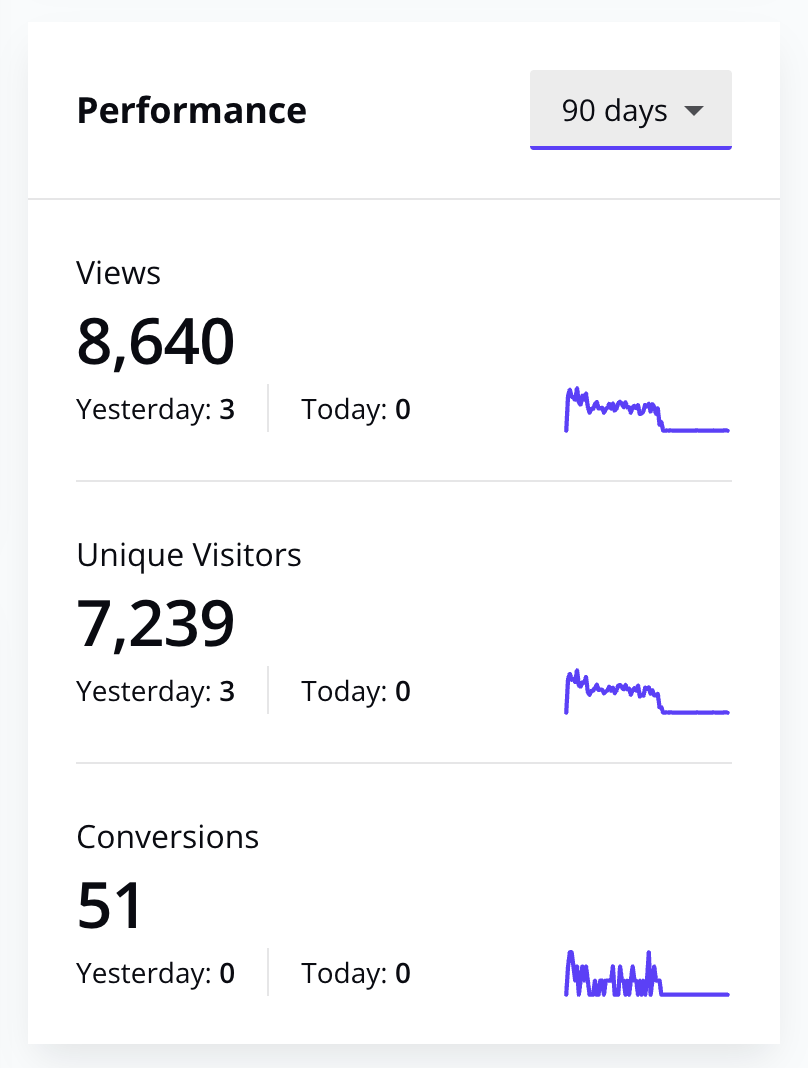
The old personal-brand site was the one that mattered. It held 372 keywords, 173 of them ranking in the top three, and pulled roughly 1,960 visits a month from Google. None of that was accidental. She had written pages on vertigo exercises, on hormones and dizziness, on allergies and vertigo, and they ranked because they answered the question better than what surrounded them.
The new clinic site had none of that. It had something worse: every page carried a noindex tag, which is a page telling Google not to list it at all. Zero keywords, zero traffic, and it'd have stayed at zero for as long as that tag was there.
Why This Is The Part People Get Wrong
A domain move looks like a small job and behaves like a large one. There are three ways it goes wrong, and they get progressively harder to spot.
The first is not knowing there's anything to do. You buy the new domain, build the new site, launch it, and that's the job finished. The old site either sits there or gets switched off. Nothing tells you this was a decision, because the new site looks perfect and Google takes weeks to react. By the time traffic is gone, the launch feels too long ago to be the cause. Most clinic owners we talk to had no idea any of this was available to them, which is fair: nobody tells you, and it isn't in the part of the job you were trained for.
The second is knowing that redirects exist and pointing everything at the homepage. This is the common one, and it's usually done by somebody technical enough to know the word. Google treats a redirect as an instruction about a specific page. Send every old URL to the homepage and you've told Google that eleven separate articles all became the same page, and that page is about a clinic rather than about hormones and dizziness. The rankings don't transfer. They evaporate, and the traffic goes with them.
The third is doing it properly but not carefully. The map gets built, most pages get matched, and the awkward ones get swept to the homepage because working out where they belong takes longer than the rest of the job. Two pages covering the same thing, a page with no obvious replacement, an old campaign URL nobody remembers. Those are exactly the pages where the ranking is sitting, and they're the ones that get rounded off.
The version that works is unglamorous: every old address points to the one page that replaced it, and nothing points at the homepage unless the homepage is genuinely what replaced it. Twenty rules, written one at a time, each one matched by hand.
What The Move Involved
The order matters more than any individual step, because several of these break the ones after them if they run in the wrong sequence.
First, the noindex came off the new site. Nothing else counts until Google's allowed to look.
Then the content moved across, so that every page worth keeping had a destination waiting for it before anything was pointed at it. Redirecting to a page that doesn't exist yet produces a 404 and Google stops trusting the address.
Then the URL map: eleven articles matched to their new homes, plus nine site pages. Booking, contact and careers went to the new site's equivalents. Two pages about the Epley manoeuvre, which had been separate on the old site, merged into the one page that now covers it.
Then the nameservers moved to Cloudflare, so the redirects could run at the domain level rather than depending on the old site staying alive. This is the step that lets you stop paying for the old hosting without losing the redirects, and it's the reason she was later able to cancel that subscription outright.
Then the rules went in as one bulk upload, all twenty at once, as permanent redirects. Permanent is the part that carries the ranking. A temporary redirect moves the visitor and keeps the ranking on the old address, which is the opposite of the goal.
Finally, Search Console and Analytics were connected on the new domain, so that if something did drop, it'd be visible while it was still fixable rather than three months later.
Who Did What
She gathered the accounts and gave us access. We did the work.
That sounds like a small distinction and it's the whole arrangement. Her domain was at GoDaddy with the DNS records already in place. She opened the Cloudflare account herself, gave us delegated access to the domain, and got us into the platform hosting the old site. From there we built the URL map, wrote the twenty rules, moved the nameservers and ran the cutover.
Every account stayed in her name. That's not a technicality, it's the part that matters in a year when she wants to change something or move again. She can hand the keys to whoever she likes, including nobody, because the domain, the DNS and the hosting were never ours to hold.
The alternative, where the agency owns the domain and the hosting and the accounts, is how clinic owners end up unable to move their own website. We've seen it, and it's usually discovered at the worst possible moment. Access we were given can be taken back. That's the point of doing it this way.
What Happened After The Switch
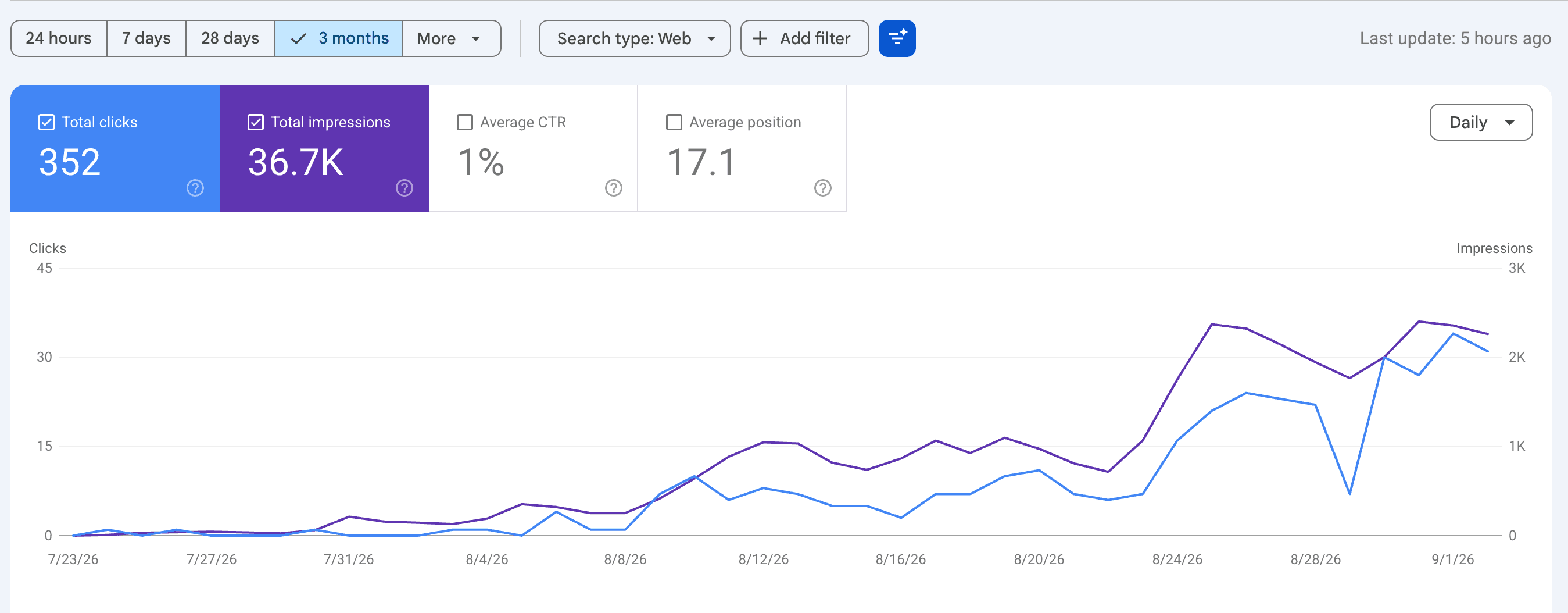
The first impressions on the new domain landed on 24 July. For the first week the site averaged position 65, which is page seven, which is nowhere.
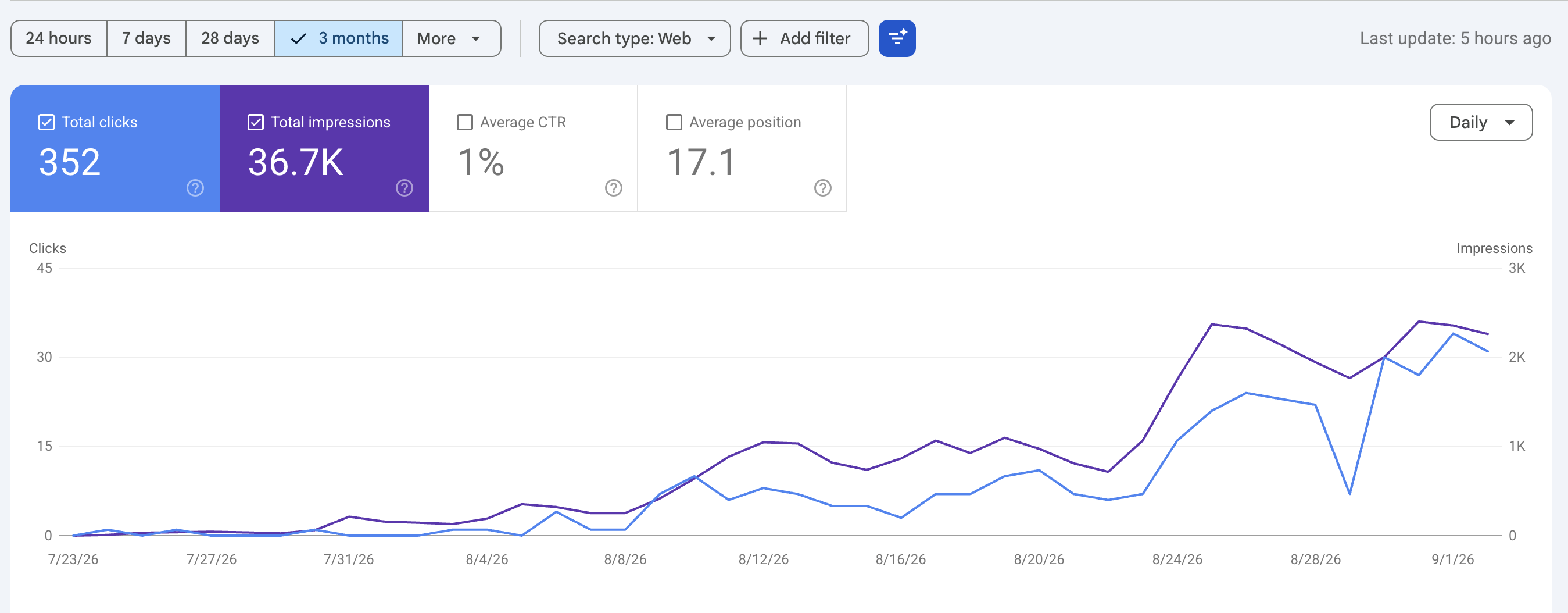
By 2 September the average position was 9.7, and the site was taking around 30 clicks and 2,300 impressions a day. Over the twenty-eight days to 2 September it recorded 347 clicks and 35,243 impressions.
The pages that ranked are the pages that ranked before. Her vertigo exercises article took 122 clicks and 8,103 impressions. The hormones and vertigo article took 97 clicks against 15,529 impressions at an average position of 10.5. Both of those held their ground at their new addresses, which is the entire test of whether a migration worked.
The Thing We Were Not Expecting
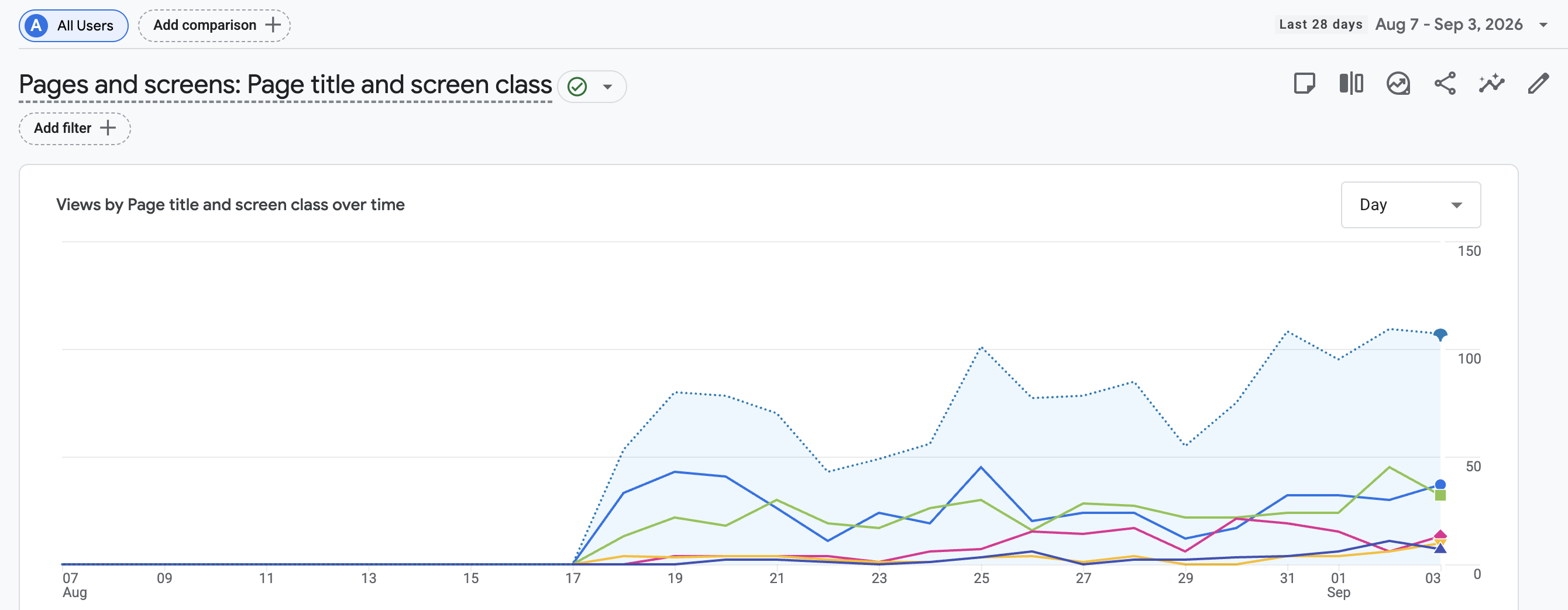
The old site's traffic was almost entirely people looking for information, in other countries, not people looking to book. That's still true: over those twenty-eight days, 152 clicks came from the United States against 107 from Canada.
What's new is that local searches started appearing, which they never did before. Vertigo treatment in her city now sits around position 8, dizziness treatment around 11, and BPPV treatment around 17. None of those were ranking on the old domain, because the old domain was a personal brand rather than a clinic in a city.
They're not yet in the positions that produce bookings, and we wouldn't present them as though they were. What they show is that the clinic site has started to register as a local clinic, five weeks in, which is the beginning of the half of this that fills a schedule.
What The Old Domain Looks Like Now
Here's the half of a migration nobody screenshots, because on its own it looks like a disaster.
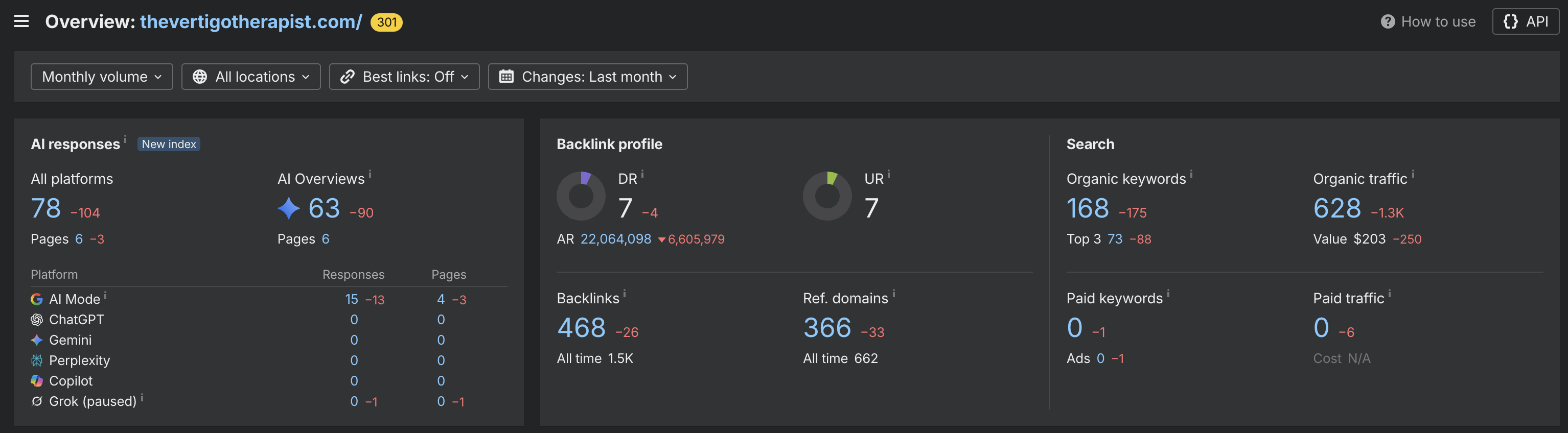
Organic keywords down 175. Traffic down 1,300. Top-three rankings down 88. If a client saw that graph with no context they'd assume the move had gone badly wrong.
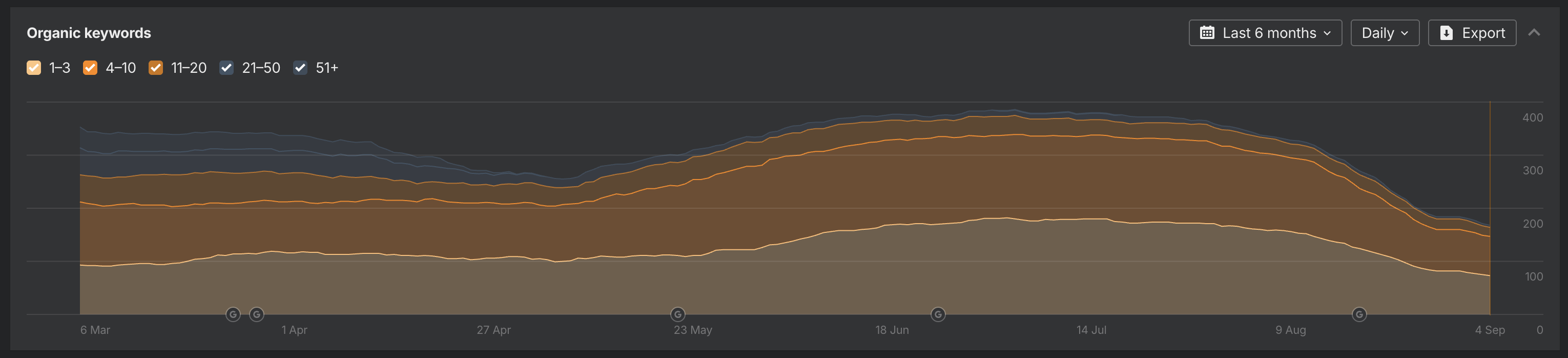
It's the opposite. That decline is the redirects working. Google is taking each old page out of its index and handing what it earned to the address that replaced it. A domain you've pointed away from is meant to empty out. One that keeps its rankings after a 301 usually means the redirects didn't take.
The dates line up. The drop starts in the second week of August, which is when the rules went live, and the new domain starts climbing in the same week.
The Same Month, On The New Domain
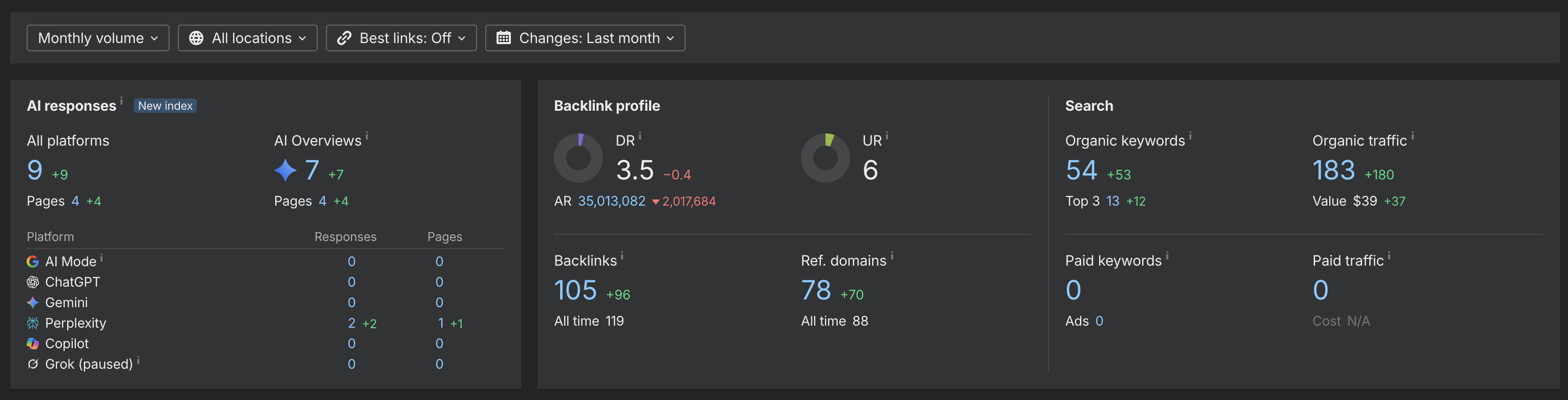
Put it next to the red one and the handover stops being an argument and becomes a picture. Keywords up 53. Top-three rankings up 12. Referring domains up 70.
That last number is the one that matters most, and it's the part people miss. Links are what most of a site's ranking strength is built on, and they were pointing at the old domain, earned over years by articles other sites had chosen to reference. A redirect passes that along: the link still points where it always did, and Google follows it through to the new address and credits it there.
Her referring domains went from 3 in mid-July to 78 by the end of August, while the old domain's fell by 33 over the same weeks. Nobody built those links. They're the old site's links arriving at their new home, which is what a correct redirect is for and what pointing everything at the homepage would have thrown away.
Why The Two Graphs Don't Add Up Yet
Put the two Ahrefs numbers side by side and there's a gap. The old domain shed around 1,240 monthly visits between early August and the end of the month. The new one, in Ahrefs, picked up 172.
That gap is a measurement lag rather than lost traffic. Ahrefs estimates visits from a keyword index it rebuilds on its own schedule, so a domain six weeks old is always behind. Search Console reports what Google served, and over those same weeks it recorded 347 clicks and more than 35,000 impressions on the new domain, with the daily click count still rising and the average position still improving.
So the two graphs are on different clocks. The one measuring the old domain is current, the one measuring the new domain is catching up, and the number worth trusting in the meantime is the one coming from Google directly. We'd expect Ahrefs to close most of that gap over the next couple of months, and if it doesn't, that's the signal something needs another look.
What We Are Not Claiming
Six weeks is early. Google is still working through the redirects, and some of this will move again before it settles. The Ahrefs gap above is the honest open question: we're reading it as a reporting lag, and the next couple of months will confirm that or not.
We're also not claiming patients. The number that matters to a clinic is booked appointments, and the tracking that'd confirm it was still being connected while this was written. What the data covers here is narrower and worth its own credit: the rankings survived a move across three domains, and the site is being found.
The Point
Years of ranking pages are one careless redirect away from being worth nothing. Most of the value in a migration is in the boring half, the map, the order, the permanent redirects, the nameservers, and there's no visible reward for getting it right. You only notice when someone gets it wrong.
She wrote the content that earned the rankings, on her own time, before she had a clinic of her own to send it to. That was never our work and we wouldn't claim it. What we did was make sure that finally owning the business didn't cost her the audience she'd built to get there.
Want to Build What They Built?
Cliniverse Membership is the membership they used. Same templates, same coaching, and you run it yourself with our team behind you.