The Campaign We Scrapped, And The One We Built Instead
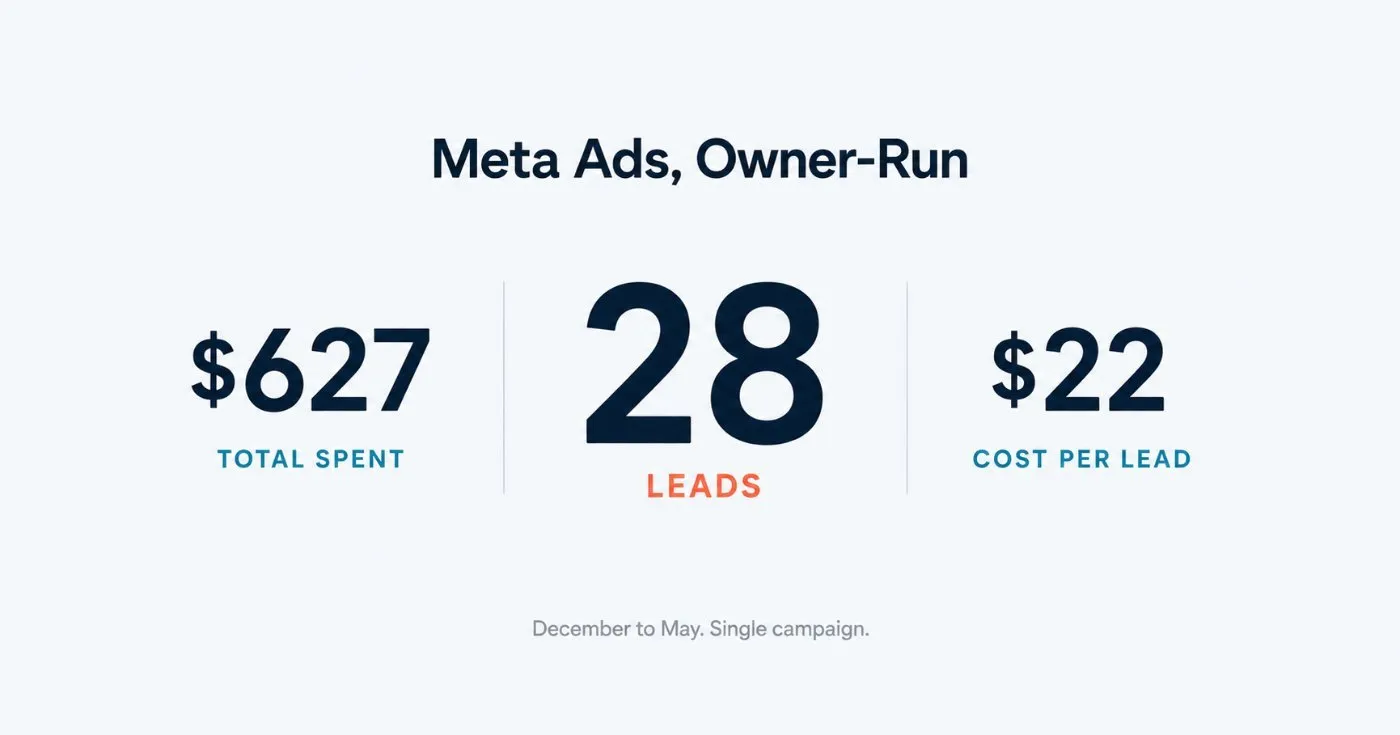
A solo RMT in a small Newfoundland community built a standard lead-form campaign, with us on a call to help set it up. It came back at about $23 a lead, well above what this market was used to. Instead of pushing the same setup harder, we got back on a call, turned it off, and built a new Messenger campaign instead. Over the roughly two months we worked together it started 17 conversations at about $7 each.
Solo registered massage therapist
Newfoundland and Labrador
Cliniverse MembershipMassage Therapy
Cost per lead, first campaign
Cost per conversation, after the pivot
Real conversations, verified by thread
The owner built the first campaign, learning the platform along the way, and we jumped on a call one Sunday to walk through it and get it set up properly together. When that approach didn't land for this market, we didn't hand back a report and walk away. We got back on a call, turned it off, and built a different campaign type together, then stayed in it until the cost per conversation came down.
“Having the campaign, ad set and ads set up for me makes it so much easier to use and to understand.”
Where This One Started
This is a solo registered massage therapist in a small Newfoundland community, the only massage therapist for about 200 kilometres in any direction. It's the market most marketing advice never accounts for: a small population, an older audience, and no real competition for a wide radius.
There's no website. No Instagram account. Bookings run through JaneApp, but the way people reach out is Facebook Messenger. A lot of the clinic's posts are nothing more than the week's open times, and people reply right in the comments or a message: "can I grab that one?" or "is Friday still open?" That's how this town already books, and it matters more than it looks. We'll come back to it.
We didn't clock all of that yet. So we started where we start with almost everyone.
The First Campaign
The standard setup for a clinic running Meta ads is a lead campaign with an Instant Form. An offer, a short form that opens right inside the app, the targeting left broad so the algorithm does its job. It works for most clinics most of the time, which is why it's the default.
The owner built it, learning the platform as they went, and we hopped on a call one Sunday to walk through it and get it set up properly together. Then it ran. And here it didn't land. The lead-form campaign produced a single lead and came back at about $23 a result. For a busy urban clinic, $23 a lead can be fine. For this market, against what this practice was used to paying to reach patients, it was too high to keep running.
What We Did Instead
The easy move would've been to push the same campaign harder. Raise the budget, swap the creative, tell the clinic to give it more time. That's what a lot of agencies do, because the default is the only setup they run.
We turned it off instead. We didn't want to leave her stuck after the first try flopped. She'd put the work in to learn this, and we wanted it to work for her, so we got back on a call and kept at it.
And here's where that Messenger detail comes back. Her patients already book by sending a message, "hey, you free Friday?" So asking them to stop and fill out a form was asking for a new habit, when the habit that already works was sitting right there. So we built a new campaign, a Messenger one. Instead of a form, the ad opened the exact thing that already works here: a message. Someone taps the ad, a conversation starts, same as if they'd DM'd the clinic themselves.
What The Numbers Show
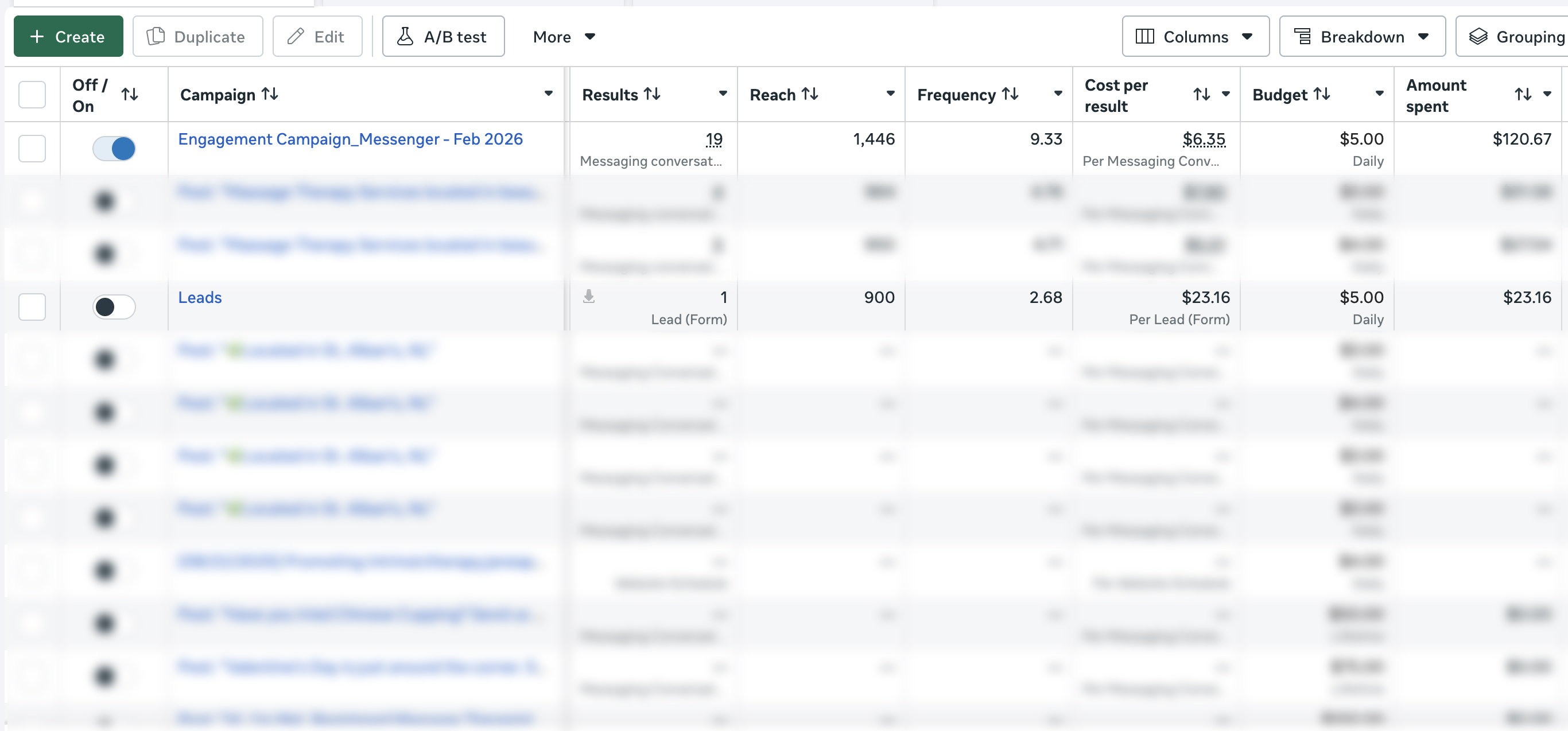
The lead form gave us one result at $23. Over the roughly two months we worked together, the new Messenger campaign started 17 conversations at about $7 each. People reaching out about appointments and times, not a form fill sitting in a dashboard.
Same clinic, same budget level, same small market. The difference was the campaign type and the willingness to throw out the first one.
The owner built both campaigns. We were on the call to guide it.
The Small-Town Reality
In a community this small, a lot of the people who reached out already knew the clinic. That's what marketing in a small town looks like. Your audience and your patient list overlap, and the ads reach people who've been in before as often as people who haven't.
That's not a weakness in the story. It's the story. The point was never that the campaign found a stack of strangers. It's that the Messenger campaign put the clinic back in front of people and made it easy for them to reach out, a quick tap and a message, no form to fill. For a solo therapist who's the only option for miles, keeping the clinic top of mind and one tap away is what fills a schedule.
What Made The Difference
Not a clever hook. Not a bigger budget. The difference was recognizing early that the default wasn't working for this market, and changing the approach instead of defending it.
That's the part most clinic owners never get from an agency. The default gets run, the default underperforms, and the report explains why it was someone else's fault. Here we changed the whole approach, together, until the numbers came back.
What Happened Next
After a couple of months, the clinic decided to move on and run marketing its own way. The reason was honest and specific: even the second campaign was a version of a standard approach, and this owner felt a market this unusual needed something more personal, more local, written by someone from here. That's a fair read, and we wouldn't argue with it.
Here's what matters. Nothing left with us. The owner built the campaign, so the campaign stayed. But the bigger thing they walked away with was knowledge: a real understanding of how Meta ads work, how to set up a campaign, and how to run one on their own. They came in never having run an ad and left knowing how to do it.
That's the whole idea. The marketing wasn't rented from an agency that takes it back when the relationship ends. The owner built it, learned it, and kept it.
The Point
A standard playbook is a starting point, not a guarantee. The clinics in unusual markets, small towns, older audiences, no competition for miles, are the ones where the default needs a second look. The work that mattered wasn't one campaign. It was helping the owner get it set up right, getting the cost per conversation down, and leaving them with something they could keep running long after we stepped back.
Want to Build What They Built?
Cliniverse Membership is the membership they used. Same templates, same coaching, and you run it yourself with our team behind you.