
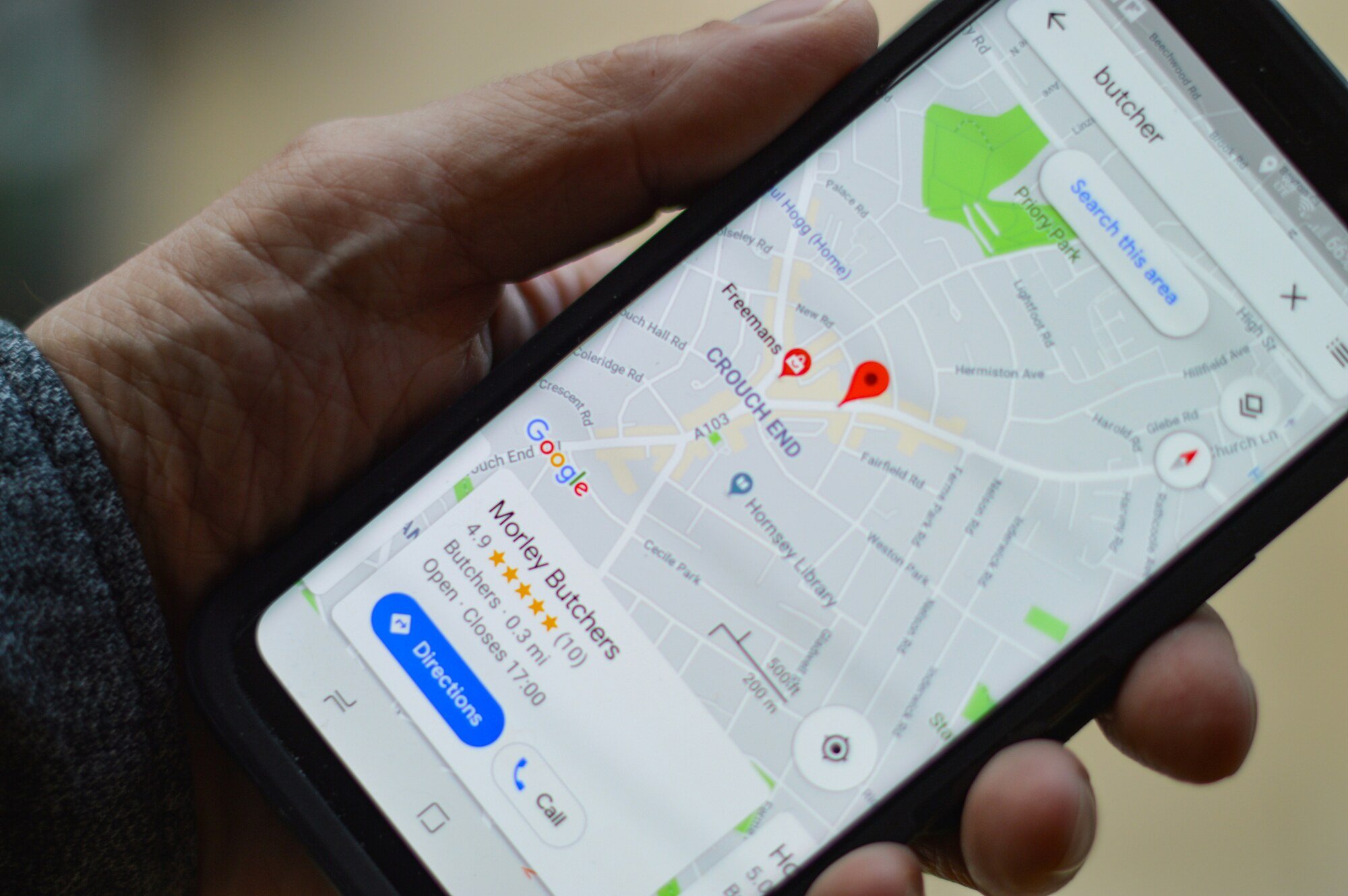
Local Business SEO: What Moves the Needle in 2026
A local clinic owner came to us not long ago with a frustrating problem. ChatGPT told him his website was outdated and that other clinics were beating him in search and SEO. His first instinct was to redo the whole site.
We dug into it. The website was not the problem.
We looked at the competitors ChatGPT flagged. Four of the six had more than double the number of Google reviews. That was it: not a fancier website, not a bigger ad budget, just reviews.
That story captures everything you need to understand about local SEO in 2026. Google and AI tools like ChatGPT, Claude, Gemini, and Perplexity are deciding which local businesses to recommend based on trust signals. Reviews are one of the biggest. But they are not the only one.
We break down exactly what moves the needle for local businesses who want to show up when your customer searches for your business or service in their city. If you run a clinic, local SEO is one piece of the wider job of marketing a physiotherapy clinic.
The Local SEO Checklist for Local Businesses
Print this out. Work through it one item at a time.
- Google Business Profile is fully complete, verified, and updated regularly
- NAP is identical across every directory, website, and social profile
- Active review collection system is in place
- Reviews are being responded to within 48 hours
- Website has service pages with local keywords in H1, title tags, and meta descriptions
- Contact page includes address, phone, and a Google Map embed
- Blog is publishing at least one localized, keyword-focused post per week
- Real photos are on the GBP and website, not stock images
- LocalBusiness schema is implemented on the website
- Listed in Yelp, Apple Maps, Bing Places, Healthgrades, RateMDs, and Chamber of Commerce
- Association directory listings include a link back to your website
- Active and consistent presence on Facebook, Instagram, and at least one other platform
- Location pages exist for every city you serve
The Three Things Google Cares About
Before getting into tactics, you need to understand the framework. Google uses three core factors to rank local businesses.
Proximity
How close is your business to the person searching? You cannot change this. But you can make sure Google knows exactly where you are.
Relevance
Does your business match what the person is looking for? This is where your content, keywords, and Google Business Profile come in.
Prominence
Is your business known and trusted? Reviews, backlinks, citations, and brand presence all feed into this.
These three factors do not work in isolation. You can be strong in one and weak in the other two and still not show up. You need to be strong across all three.
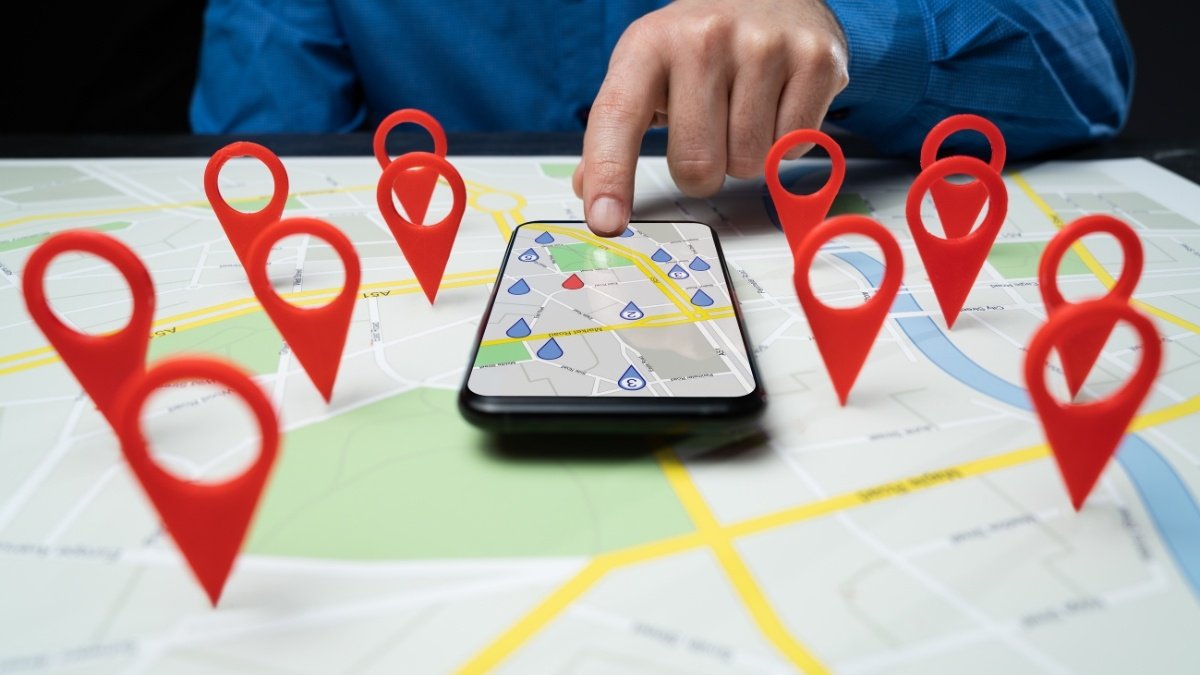
Your Google Business Profile Is the Foundation
If you have not fully built out your Google Business Profile (GBP), stop reading and do that first. It is the single most important piece of local SEO real estate you own.
Here is what a fully optimized GBP looks like.
- Your primary category matches what you do. Physiotherapy, chiropractic, massage therapy, osteopathic medicine. Pick the most specific one.
- Your business name, address, and phone number are exact and consistent with every other place you appear online.
- Your services are listed in detail. Do not just say ‘physiotherapy.’ List dry needling, vestibular rehab, sports injury treatment, and every other service you offer.
- You have a real, keyword-rich business description. Write it like a patient is reading it, not like a regulator.
- You post updates regularly. Google treats this like an activity signal. Businesses that post consistently rank better.
- Add photos and videos regularly. You have your own photos. Use them. More on this below.
Most clinics set up their GBP once and forget it. The ones showing up at the top treat it like a living document.
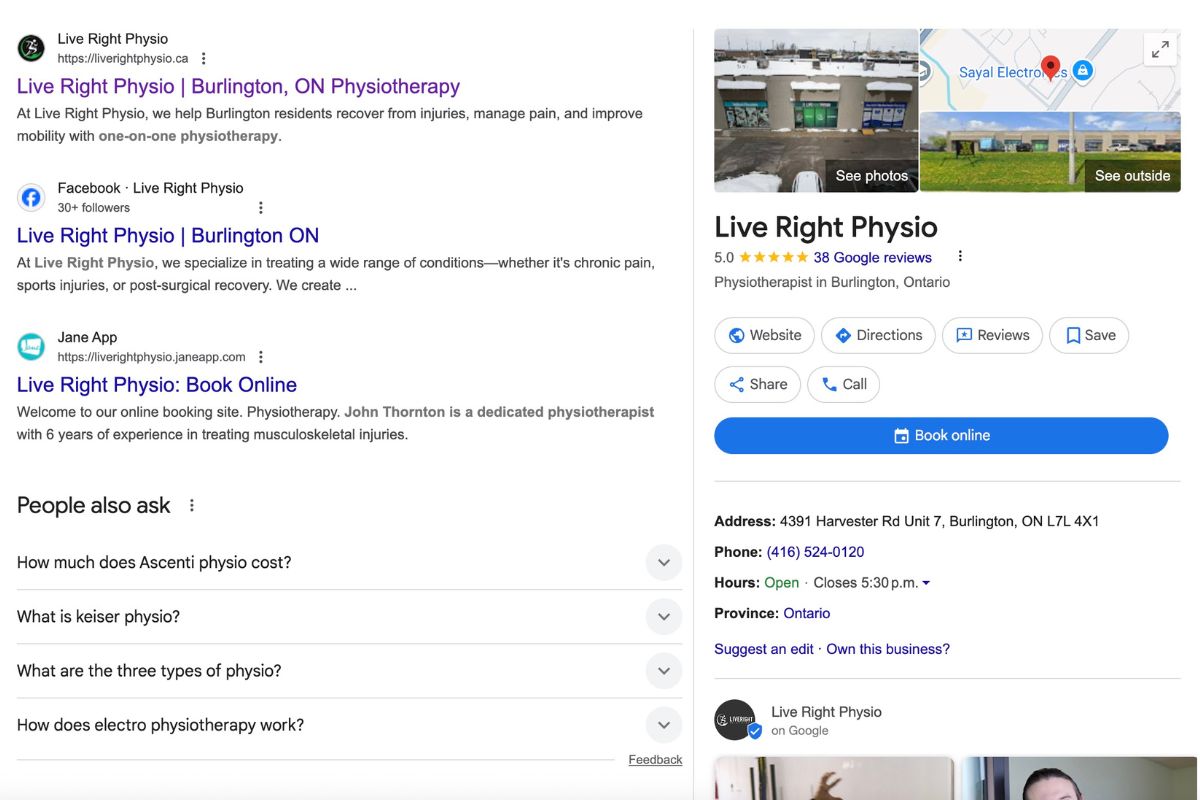
Reviews Are No Longer Optional
The story we opened with was not a fluke. We see this pattern constantly. Businesses with more reviews are winning in local search, and the gap is growing because of AI.
Here is why:
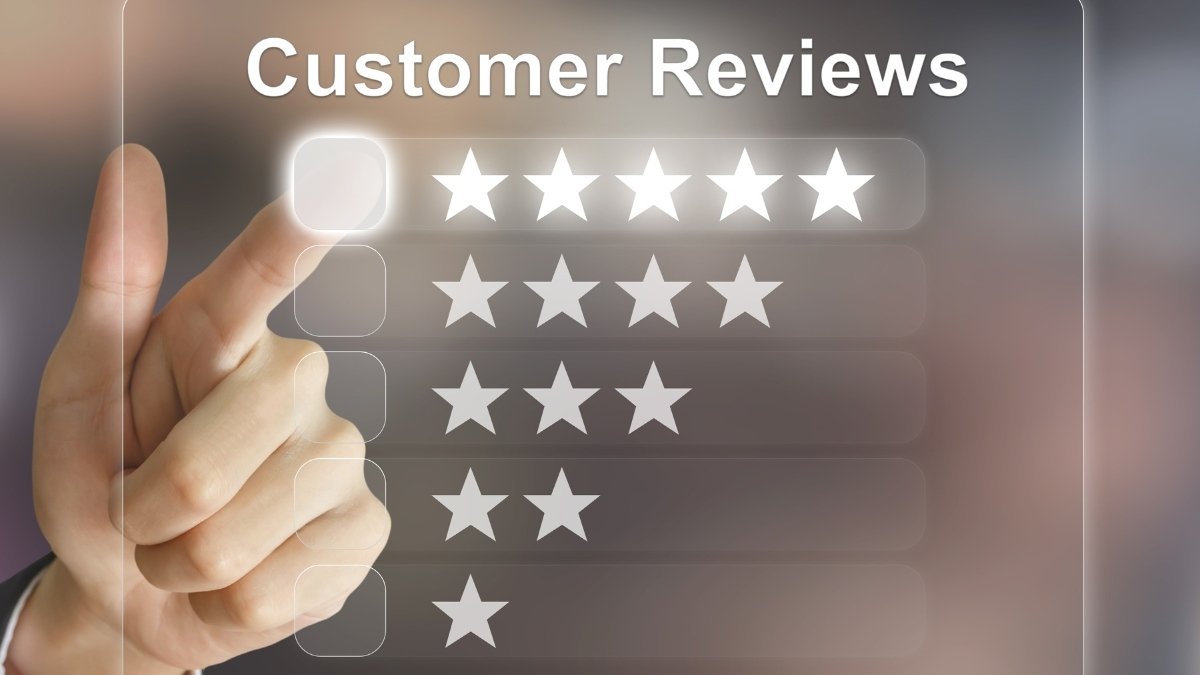
When a potential customer asks ChatGPT or Google’s AI Overview to recommend a physiotherapist near them, the AI is looking for trust signals. Reviews are the clearest signal available: volume, recency, and content all matter. A 4.9-star rating with 200 reviews crushes a 5.0-star rating with 12 reviews.
What you need to do.
- Build a simple system for asking every patient to leave a review after their appointment. Text message follow-up works well for this.
- Respond to every review, positive and negative. Google tracks your response rate.
- Never fake reviews. Google removes them and it can penalize your profile. The only reviews worth having are real ones.
- Aim for specificity in your review requests. Ask patients to mention the specific treatment or condition they came in for. Reviews that include keywords like ‘physiotherapy for lower back pain in Burlington’ carry more weight.
Reviews take time to build, so start the system today. This is a compounding asset.
Name, Address, Phone: Get This Right Everywhere
Citations are mentions of your clinic across the web. Directories, listing sites, association pages, and local business platforms. Every citation that includes your name, address, and phone number (NAP) adds a trust signal to Google.
The key word is consistent. If your GBP says ‘123 Main St’ and Yelp says ‘123 Main Street,’ Google does not fully trust either. Inconsistency creates doubt. Although that example is small and may not have a huge impact, when you have clearly two different addresses, this is a big red flag.
The directories that matter most for clinic owners.
- Google Business Profile (this is the one that matters most)
- Apple Maps
- Bing Places
- Yelp
- Healthgrades
- RateMDs
- Your local Chamber of Commerce (this is a high-quality backlink, not just a citation)
- Your provincial or national association directory
Do an audit. Search your business name and see where you appear. Fix every inconsistency you find. This is tedious work that most competitors skip. That is exactly why you should do it.
Your Website Has to Speak Google’s Language
Your website is the second major signal after your GBP. It needs to tell Google exactly who you serve, what services you offer, and where you are.
The Basics
- Your H1 includes your primary service or keyword and city. Example: ‘Physiotherapy in Burlington, Ontario.’
- Your title tag and meta description are written and include local keywords.
- Your NAP matches your GBP exactly. Phone number format, address format, everything.
- You have a dedicated contact page with a Google Map embed.
- Each core service has its own page. Physiotherapy, massage therapy, and chiropractic should not all live on one page.
Blogging Still Works
A blog is not just a way to look credible. It is a direct ranking tool when done properly. Local blog content signals to Google that you are active, relevant, and authoritative.
Write posts that combine your expertise with local context. Examples.
- ‘Best exercises for lower back pain for desk workers in Hamilton’
- ‘How Burlington athletes are recovering faster with dry needling’
- ‘What to expect at your first chiropractic visit in Oakville’
Put local keywords in your headings, naturally throughout the body, and in the meta description. Do not stuff them. Write like a human who happens to include the city name where it makes sense.
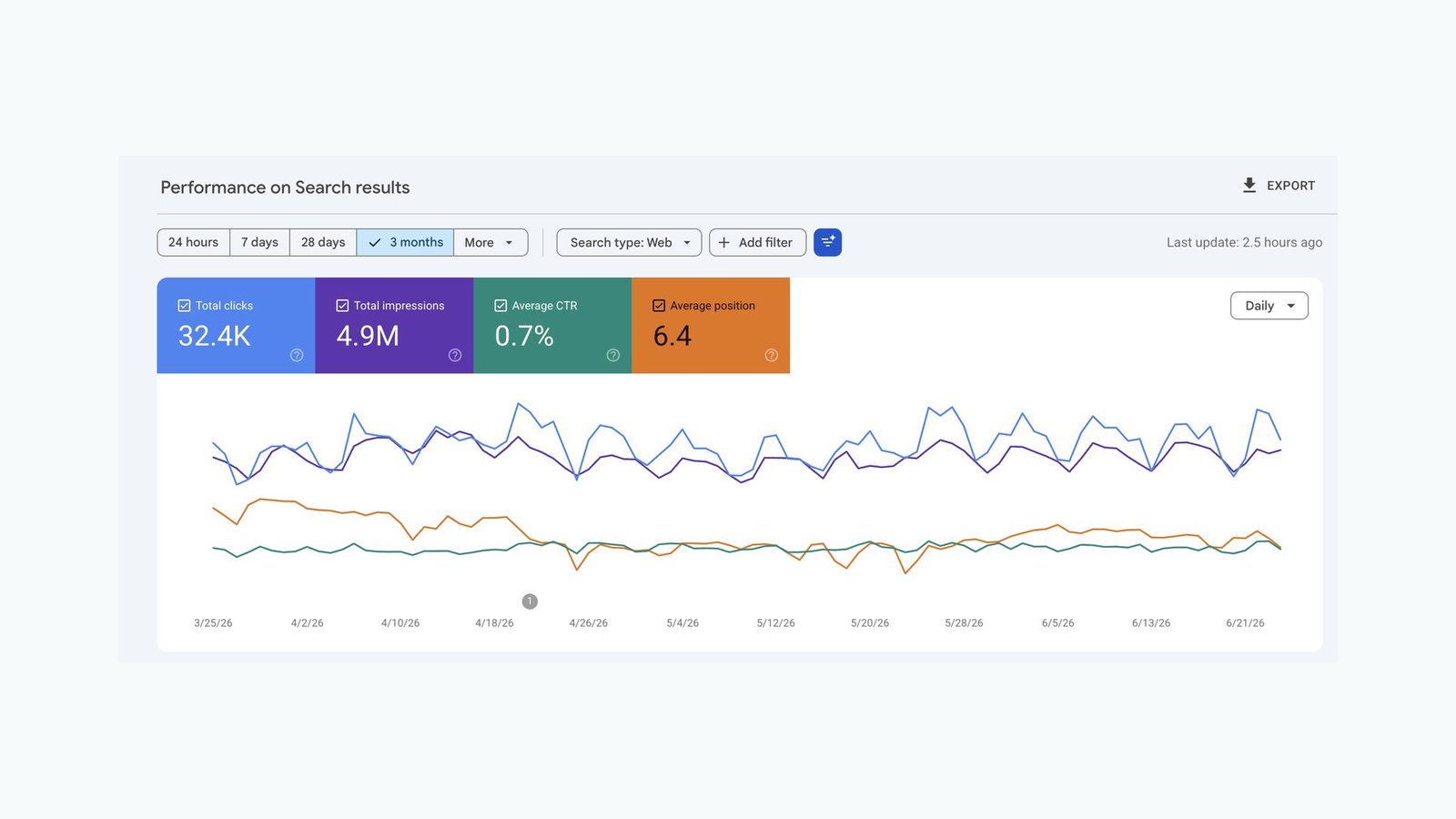
You don't have to guess which local searches to write for. Google Search Console shows you the exact terms already bringing patients to your site, including the ones you rank for on page two that a single post could push onto page one.
One post per month, consistently, beats 12 posts all at once followed by silence.

Real Photos Beat Stock Photos Every Time
Stock photos kill trust because AI can identify them, patients can identify them, and Google weighs original media differently than generic images.
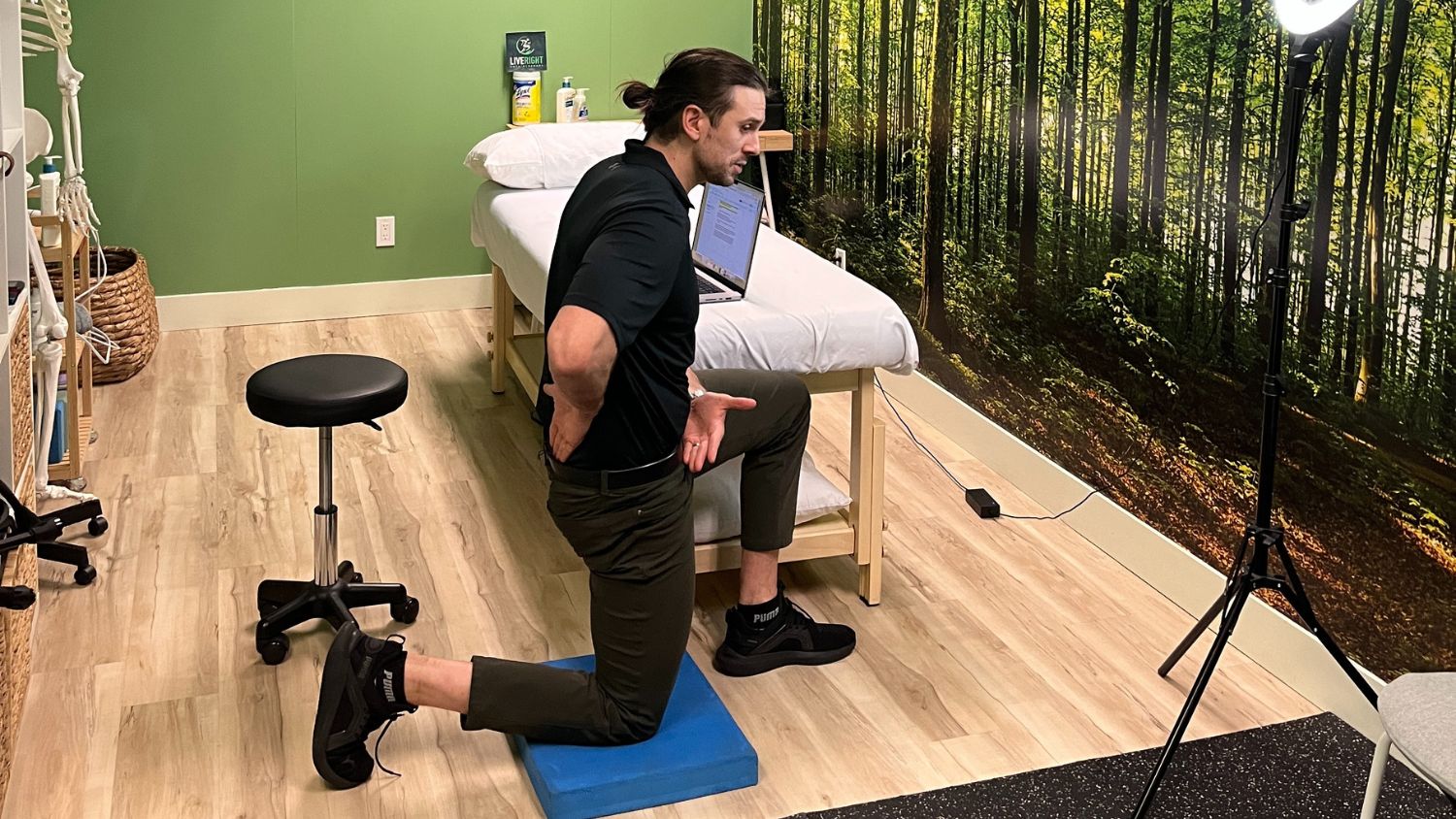
Take photos of your own business: your team, your equipment, real customers who have given consent. Post these to your GBP regularly. Google rewards active profiles with fresh, original media.
This matters more than most business owners realize. A business with 30 real photos on their GBP consistently outperforms a clinic with 3 stock photos. The signal is authenticity. That is what builds trust with both Google and the people searching.

Schema Markup: The Technical Edge Most Businesses Miss
Schema markup is code added to your website that tells search engines exactly what your business is, where it is, and what it offers. It is not visible to visitors but it is very visible to Google and AI.
For a local business, you want LocalBusiness schema at minimum. This tells Google your business name, address, phone, hours, and type of practice. More advanced implementations include MedicalBusiness schema and individual service schemas.
If your website is on WordPress, plugins like RankMath can handle this without writing code. If you are not sure whether your schema is set up, run your URL through Google’s Rich Results Test. It takes 30 seconds.
Most local business websites have no schema at all. Adding it is a quick win that your competitors are almost certainly not taking advantage of.
Being Everywhere Has Value Now
This might sound like the kind of advice that gets ignored because it feels overwhelming. It is not. Here is what it means.
AI tools are crawling everything. Facebook, Instagram, YouTube, LinkedIn, your website, your GBP, news mentions, directory listings. When someone asks ChatGPT who the best physiotherapist in their city is, the AI is synthesizing all of that data into a recommendation.
A clinic with an active Instagram, a functioning website, a complete GBP, and a few directory listings is going to consistently beat the clinic that only has a website.
You do not need to post 10 times a day. You need to be present, consistent, and active. One to five posts per week across the platforms where your patients spend time. Show up on Facebook, Instagram, and LinkedIn. If you have the capacity, YouTube Shorts and local community groups add real reach.
Being everywhere is not a vanity play. It is an authority signal.
Build Service and Location Pages
If you serve multiple cities or have multiple locations, you need location-specific pages. One page per service per city.
A Burlington physiotherapy clinic that also treats patients from Hamilton and Oakville should have pages targeting each of those markets. Each page needs original content. Do not copy one page and swap the city name. Google penalizes thin, duplicated content.
Structure each page around the local keyword, the service, the conditions treated, and a clear call to book. Include the city name in the H1, title tag, meta description, and URL slug.
This is how smaller, newer businesses can compete with well-established practices. One targeted page that fully answers what a searcher in a specific area is looking for can outrank a business that has been around for 20 years but never built local content.
Local Backlinks: Quality Over Quantity
A backlink is when another website links to yours. Google treats backlinks as votes of confidence. Not all votes are equal.
For clinic owners, the best backlinks come from locally relevant, trusted sources.
- Your local Chamber of Commerce membership page
- Your provincial association directory listing
- Local news articles or health features
- Guest posts on local health or wellness publications
- Sponsorships of local sports teams or events
You do not need hundreds of backlinks. Five high-quality links from trusted local sources will move the needle more than 50 links from irrelevant directories.
If you are a member of the Alberta Physiotherapy Association, BC Physiotherapy Association, or the Canadian Physiotherapy Association, make sure your listing on their website links back to yours. Those are authoritative backlinks that most clinic owners leave on the table.
AI Is Now a Referral Source
This is not something most local SEO guides talk about yet. It matters now.
Patients are asking ChatGPT, Claude, and Gemini for clinic recommendations. These tools do not just pull from Google. They synthesize data from across the web. Your GBP, your website content, your reviews, your social media presence, your directory listings, your news mentions, and your association affiliations all contribute to how these tools understand and recommend your business.
The clinic owner story from the beginning of this post is not unique. We hear versions of it regularly. Patients are using AI to find care providers. The clinics that are winning in this new environment are not necessarily the ones who optimized for AI specifically. They are the ones who built genuine, consistent online authority across every channel.
That is the point. Strong local SEO and strong AI visibility are the same thing. Build trust, stay active, and make it easy for any tool to confirm that your clinic is the best option in your area.
Ready to Market Your Clinic Without the Agency Price Tag?
Cliniverse gives physiotherapists, chiropractors, massage therapists, and osteopaths the tools, training, and support to run their own marketing. For $200 a month, you get everything an agency would charge $3,000 for. It’s a done-with-you marketing platform built for clinic owners who want to run their own marketing without going it alone.
Take our free Two-Minute Marketing Quiz to find out where your biggest marketing opportunities are right now.
Related Articles
 Get Found Online
How to Help Your Clinic Rank Higher With Google Business Profile in 2026
If patients cannot find your clinic on Google Maps, here's what to check on your Google Business Profile and how to fix it, step by step.
Tash · September 12, 2026
 Get Found Online
What Google Search Console Reveals About Your Patients
Google Search Console shows the searches that bring patients to your clinic site. Here's what it does, how we use it, and how to turn it into more bookings.
Tyler · August 5, 2026
 Get Found Online
How To Set Up Google Search Console the Right Way
Set up Google Search Console as a Domain property with one DNS record so you capture every version of your clinic site in a single dashboard.
Tyler · July 2, 2026
Run Your Own Clinic Marketing
Cliniverse gives you the ads, posts, courses, and AI to grow your clinic, with experts on call. You own everything you build.