

Questions to Ask a Digital Marketing Company Before Hiring Them
Hiring a digital marketing agency can help your business grow, but it can also be an expensive mistake if you don’t know what to look for.
Most business owners sign contracts before they understand what they’re buying.
These are the questions to ask a digital marketing company, designed to help you make the right decision before you commit your time, money, or data to a marketing company.

Questions About Ownership, Access, and Control
This is one of the most overlooked parts of hiring a digital marketing company. It is also where the most damage happens when things go wrong.
If you do not own your website, your domain, your ad accounts, and your data, you do not own your marketing. You are renting it. You should and need to own all of this stuff.
Before hiring any marketing agency, ask these questions clearly and directly:
- Who owns the domain and website? (if you currently own it, ask if you will continue to own it)
- Will I have full admin access to all platforms?
- Who owns the ad accounts and the data inside them?
- What happens to everything if we stop working together?
We have seen this go wrong firsthand. A business owner signed a contract they did not fully understand. The marketing company said they needed to switch to their domain and hosting under their own accounts. The owner paid monthly, but never owned the website or infrastructure.
When the relationship ended, the agency controlled everything. To regain access, the business had to transfer his domain, move to a new hosting provider, and re-upload his website to a new hosting provider to take ownership of what they had already paid for. The cost was not just money. It was time, and stress.
This situation is more common than most people realize.
A good agency will clearly explain ownership, provide admin access, and make it easy for you to leave if things are not working. Also, clearly explaining what you are signing and locking in to. Agencies that rely on lock-in instead of results are a risk.
If an agency is vague about access, ownership, or what happens when you part ways, treat that as a serious red flag.

Questions That Reveal Strategy and Thinking
A marketing agency does not add value by running ads or posting content. They add value by making the right decisions before anything goes live.
If an agency cannot clearly explain how they think, what they prioritize, and why they are choosing certain tactics, you are paying for activity, not strategy.
Before hiring an agency, ask these questions:
- How do you decide which marketing channels we should use first?
- What does your strategy for the first 30 to 60 days look like?
- How do you prioritize quick wins versus long-term growth?
- What would make you say this is not the right fit?
Pay close attention to how these questions are answered.
Strong agencies will ask you just as many questions as you ask them. They will want to understand your goals, margins, capacity, and constraints before recommending anything. Their answers should feel specific to your business, not recycled from a template.
If everything sounds generic, overly confident, or rushed, that is a warning sign. Good strategy requires context. There is no one-size-fits-all marketing plan.
The goal is not to find an agency that says yes to everything. The goal is to find one that can explain why certain things should happen now, later, or not at all.

Questions About Measurement, Reporting, and Results
Marketing only works if you can clearly see what is happening and why. If an agency cannot explain how results are measured, you will never know whether your investment is working.
Before hiring a digital marketing company, ask these questions:
- What metrics do you report on regularly?
- How do you define success for my business?
- How do you track results, not just clicks or impressions?
- How often will we review performance and make adjustments?
- What happens if results stall or decline?
The answers should focus on business outcomes, not vanity metrics. Traffic, impressions, and engagement can be useful, but they do not pay the bills on their own.
A good agency will connect marketing activity to leads, bookings, revenue, or other meaningful outcomes. They should be able to explain what is working, what is not, and what they plan to change next.
Be cautious if reports are overly complex, hard to understand, or focused only on surface-level numbers. If you need a translator to understand your own marketing reports, that is a problem.
Clear reporting builds trust. It also gives you the confidence to make informed decisions instead of guessing what is driving growth.

Questions About Experience, Proof, and Fit
Not all experience is equal. Working with large brands does not automatically mean an agency is right for your business, especially if your size, budget, or goals are different.
Before hiring a marketing company, ask these questions:
- Have you worked with businesses like mine before?
- Can you share examples tied to leads, bookings, or revenue?
- What did not work in past campaigns and why?
- What types of businesses are you not a good fit for?
- Who will be working on my account day to day? Do you outsource anything? Hire freelancers or a VA?
Pay attention to how specific the answers are. Real experience includes both wins and lessons learned. Agencies that only talk about success stories without acknowledging challenges are leaving out important context.
Fit matters just as much as skill. A strategy that works for a large company with a big budget may not work for a smaller business with limited resources. A good agency will be honest about whether your business is a fit for their process and priorities.
The goal is not to find the most impressive agency on paper. It is to find one that understands your business, your constraints, and what success looks like for you.

Questions About Pricing, Contracts, and Commitments
Marketing relationships often fail not because of performance, but because expectations were never clearly set around cost, scope, and commitment.
Before hiring a digital marketing company, ask these questions:
- How is your pricing structured?
- What is included in the monthly fee and what costs extra?
- Is there a minimum contract length?
- Are there fees if we end the contract early?
- What does the exit process look like if things are not working?
- What budget do you realistically need to succeed?
Be cautious of long-term contracts signed before any results are proven. While some level of commitment is reasonable, lock-in should never replace performance.
A good agency will clearly explain what you are paying for, what outcomes are realistic at your budget level, and how the relationship can end if expectations are not met. There should be no confusion about fees, timelines, or obligations on either side.
If pricing feels vague or constantly changing, that is a red flag. Transparency at the start prevents frustration later.
The goal is not to find the cheapest option. It is to understand the true cost of getting meaningful results and whether that investment makes sense for your business right now.
Questions About Tools, Systems, and Communication
Results do not come from tools alone. They come from how work is organized, communicated, and executed over time.
Before hiring a marketing agency, ask these questions:
- What tools and platforms do you use and why?
- How do you manage projects and timelines?
- How do we communicate and how often?
- Who is my main point of contact?
- How do you document work and decisions?
The answers should be simple and clear. You should understand how work gets done, how progress is tracked, and how issues are handled when they come up.
Strong agencies rely on systems, not memory. They document strategies, track changes, and communicate consistently. This keeps everyone aligned and prevents small problems from turning into bigger ones.
If communication feels unclear or overly informal before you sign, it usually does not improve after. A lack of structure often leads to missed expectations and frustration on both sides.
Good marketing is not just about execution. It is about having repeatable processes that produce consistent results.

What to Watch Out For When Hiring a Digital Marketing Company
Not all marketing agencies operate the same way. Some rely on results. Others rely on contracts, confusion, and buzzwords.
Watch out for these red flags:
- Guaranteed results or promises of fast growth
- Vague answers about how success is measured
- No admin access to your accounts or data
- Long-term contracts required upfront
- One-size-fits-all packages
- Heavy focus on impressions, followers, or vanity metrics (impressions, clicks)
- Poor communication or unclear reporting
- Avoiding questions about ownership or exit terms
Marketing takes testing, iteration, and time. Any agency that promises certainty without understanding your business is oversimplifying the process.
A good agency will be honest about risks, timelines, and trade-offs. They will welcome questions, not avoid them. Transparency should feel natural, not forced.
If something feels unclear or overly complicated during the sales process, it will likely feel worse once the contract is signed.
Trust is built through clarity. If an agency cannot provide that from the start, it is worth slowing down and reassessing.

How to Decide What Makes Sense for Your Business
Hiring a digital marketing company is not a milestone. It is a tool. The right choice depends on your goals, budget, and how involved you want to be in your marketing.
In most cases, there are three realistic options.
Option 1: Do It Yourself
Doing your marketing on your own is the lowest-cost option in terms of money, but the highest in time and effort. It requires learning the basics, testing what works, and making mistakes along the way.
This approach can make sense if your budget is limited and you are willing to invest time into learning how marketing works.
Option 2: Hire a Marketing Agency
Hiring an agency can speed up execution and reduce the day-to-day workload. It also comes with higher costs and requires trust in someone else’s decisions.
This option works best when you understand enough about marketing to ask the right questions, review performance, and hold the agency accountable.
Option 3: Take a Hybrid Approach
Many businesses benefit from learning the fundamentals first, then using tools, systems, and guidance to stay in control.
A hybrid approach allows you to understand what is happening, make informed decisions, and avoid common mistakes before fully outsourcing. It gives you leverage, whether you continue in-house or hire an agency later.
The goal is not to rush into a decision. It is to choose the option that gives you clarity, control, and the best chance of long-term success.
When you understand how marketing works, every option becomes less risky.
Related Articles
 Get Found Online
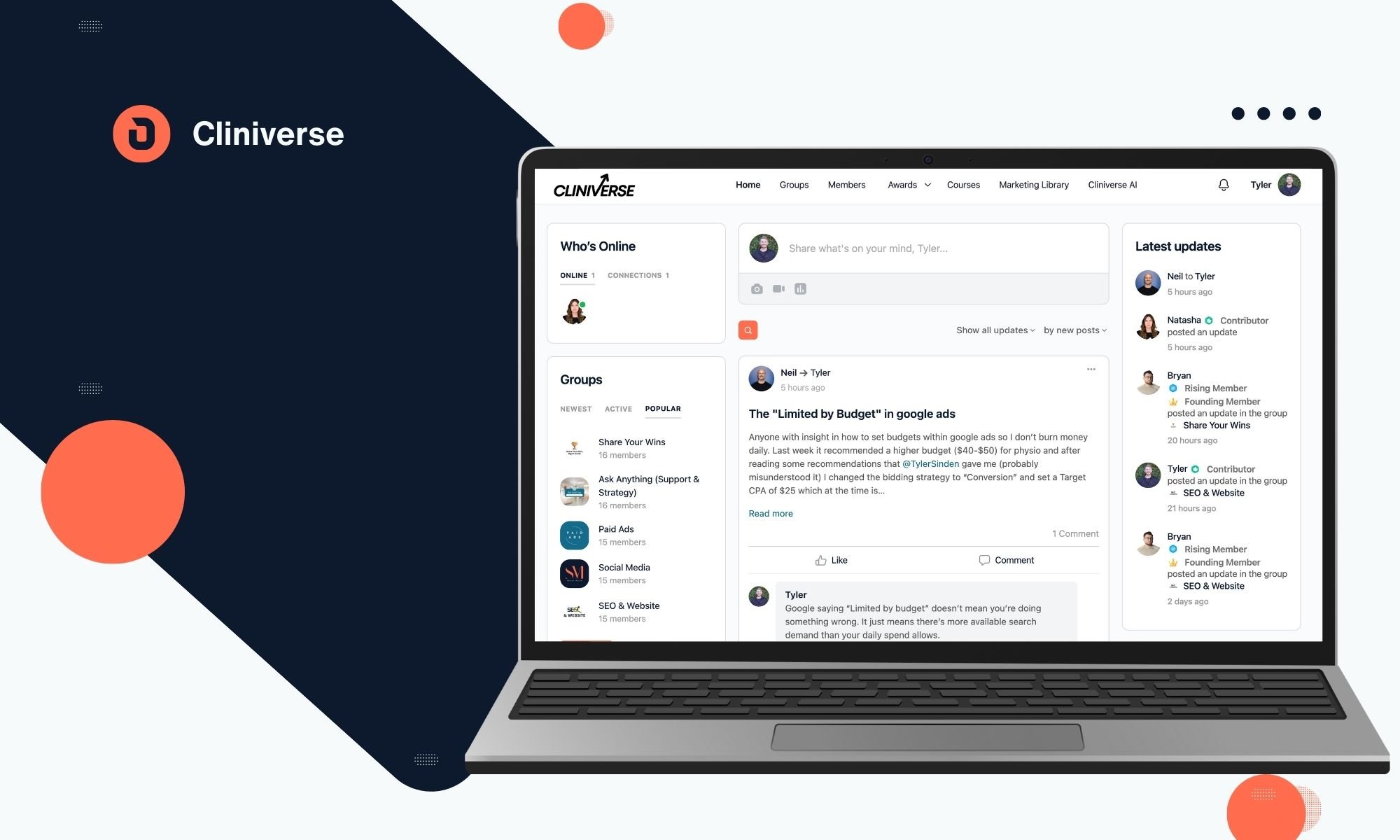
What is Cliniverse? The Done-With-You Marketing Platform for Clinic Owners
Cliniverse is a marketing portal by NewFrame Digital that helps physio, chiro, osteo, and massage clinics grow without hiring an agency.
Tyler · April 22, 2026
 Get Found Online
Hiring a Marketing Agency vs DIY Marketing vs a Proven Done With You System
Compare hiring a marketing agency, doing it yourself, or using a done-with-you system to choose the right marketing approach for your business.
Tyler · February 1, 2026
 Get Found Online
Local Business SEO: What Moves the Needle in 2026
Most clinics lose patients to competitors with worse care. Learn the local business SEO ranking factors that determine who Google recommends.
Tyler · March 8, 2026
Run Your Own Clinic Marketing
Cliniverse gives you the ads, posts, courses, and AI to grow your clinic, with experts on call. You own everything you build.