
Does AI Content Rank on Google (and AI Search)?
You’ve probably heard two completely different things about AI content and SEO. Some people say AI-written blogs get penalized. Others say they rank just fine.
Both sides are partly right. The answer depends on one thing: the quality of what you publish.
Here’s what the evidence shows, and what you need to do to make AI content work for your business.
So, Does AI Written Content Rank on Google?
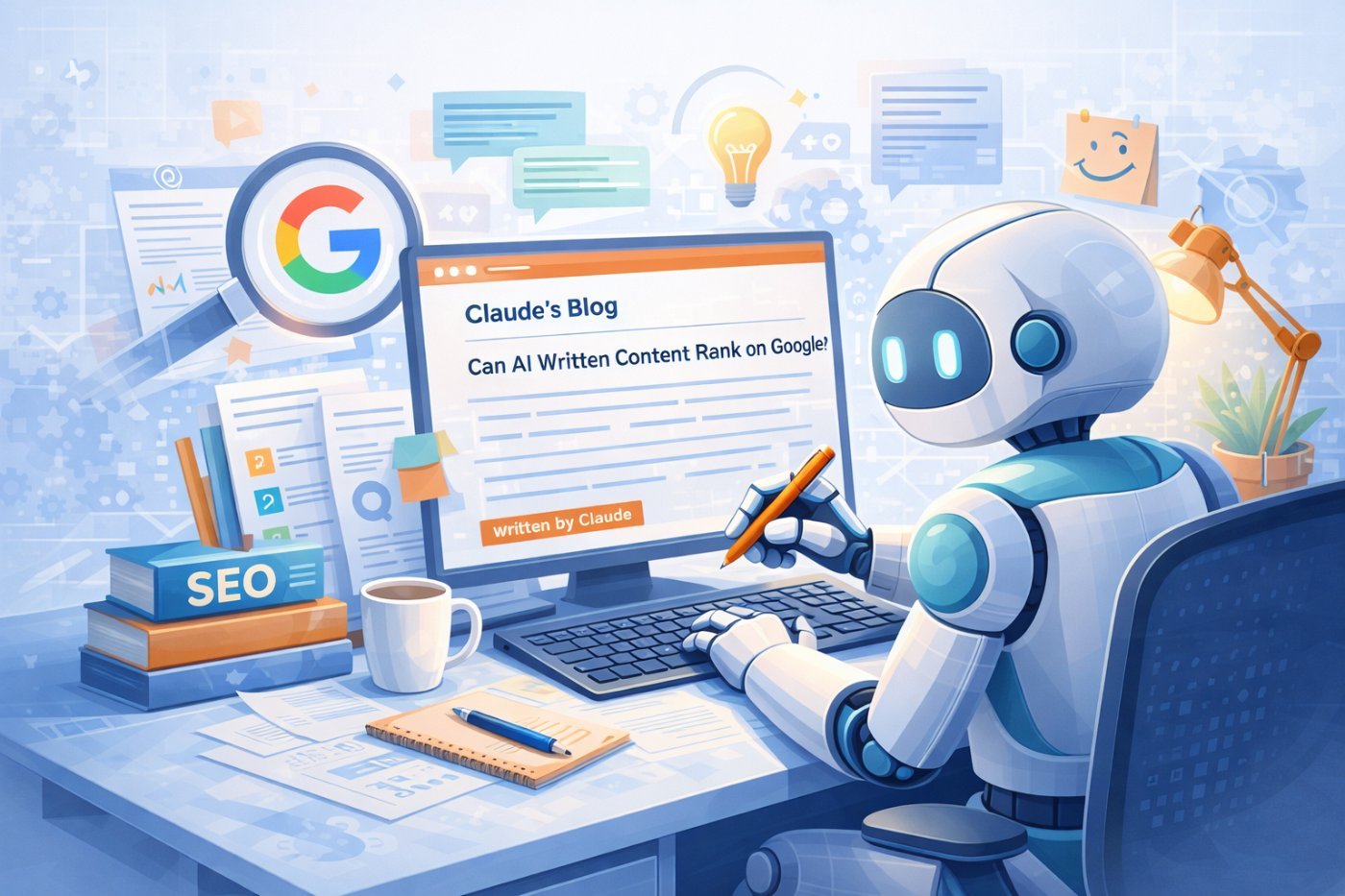
Yes, AI-written content will rank on Google. Google’s position is clear on this: what it rewards is original, high-quality content that demonstrates expertise, experience, authoritativeness, and trustworthiness. That framework is called E-E-A-T, and it applies to every piece of content on the web, regardless of who or what produced it.
What separates ranking content from buried content is not authorship. It’s quality.
So when someone tells you AI content can’t rank, they’re wrong. The tool is not the issue. The output is.
What We’ve Personally Seen
We’re not just repeating what Google says. We’ve produced hundreds of pieces of AI-assisted content across multiple industries and we’ve personally watched it rank.
Not all of it ranks. That’s true of any content, written by anyone. But plenty of it does. We’ve seen AI-assisted content rank in some of the most competitive spaces online, including digital marketing itself.
That last part matters. Digital marketing is one of the most saturated content niches on the internet. Marketing agencies are supposed to be good at this. Every competitor is actively publishing content. If AI-assisted content can rank in that environment, it can rank in yours.
So if someone is making the bold claim that using AI to write your content means it won’t rank, that’s factually not true. We have the proof sitting in Google Search Console, the free Google tool that shows exactly which searches are bringing people to each page.
Why AI Content Fails (And It’s Not What You Think)
The problem isn’t that AI wrote the content. The problem is how most people use AI to write content.
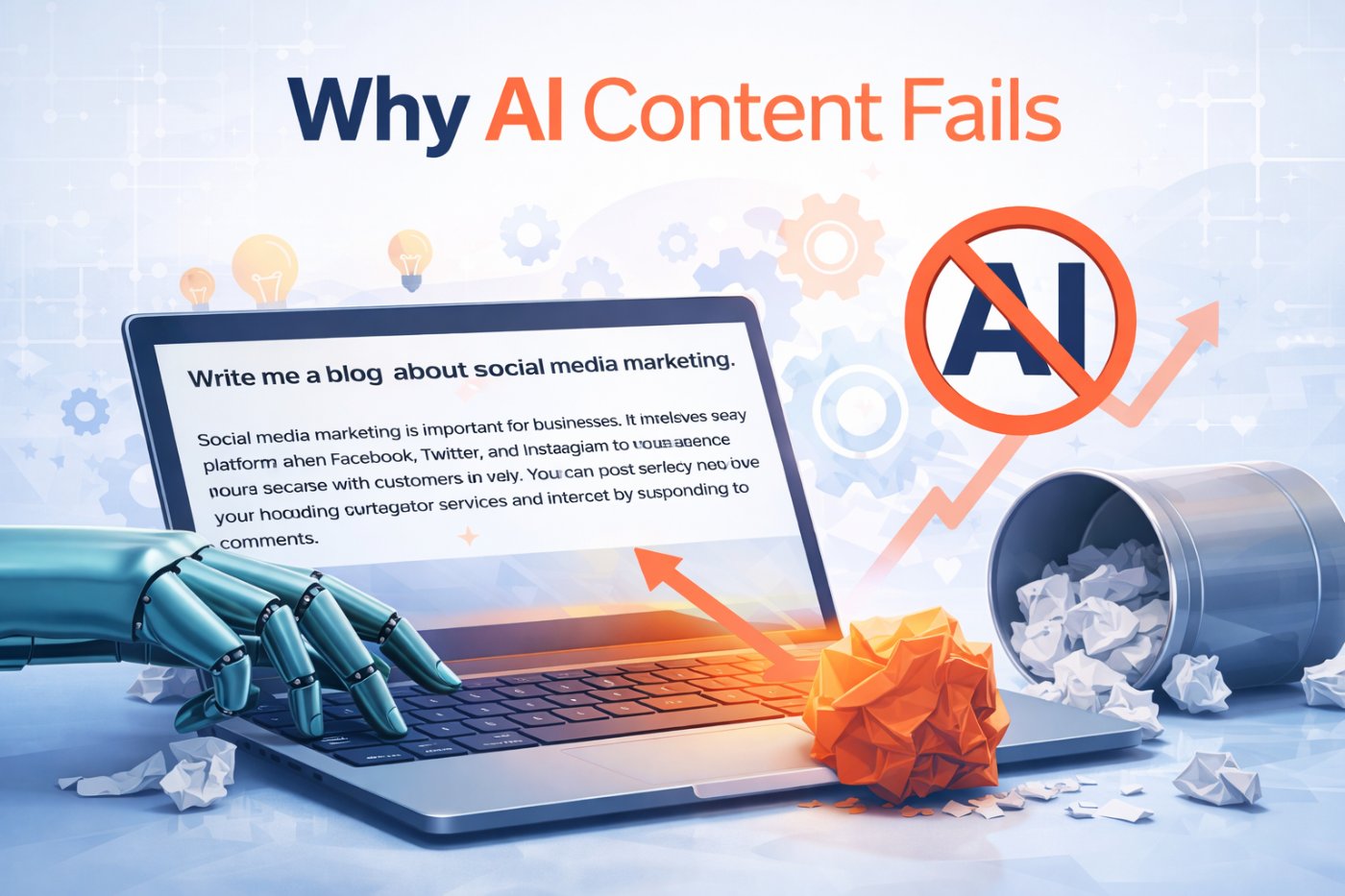
If you open a fresh ChatGPT session with zero context and type “write me a blog about social media marketing” and paste whatever comes out, you’ll get something that reads like every other surface-level article on the internet: no real insight, no specific experience, no useful depth.
Google calls this lazy AI. And it actively filters it out.
Here’s what lazy AI content looks like:
- Generic advice with no specific perspective or proof
- No real-world examples or industry knowledge baked in
- Repetitive structure that covers everything and teaches nothing
- Content that could apply to any business in any industry
That content doesn’t fail because AI made it. It fails because it isn’t good. A human writing the same way would get the same result.
Competitiveness and Targeting Matter More Than You Think
One thing most AI content articles skip over is this: how hard it is to rank depends heavily on where you’re competing and who you’re competing against.
There’s a big difference between:
- A local physiotherapy clinic targeting “physiotherapy in Burlington, ON”
- A national software company targeting “project management software”
- A marketing agency targeting “digital marketing tips” against thousands of other agencies doing the same thing
Local content is generally more achievable. The competition is smaller, search intent is specific, and Google actively wants to surface local businesses for local searches. If you’re a clinic owner writing content for your city, you have a real advantage. You don’t need to beat the whole internet. You just need to beat the other clinics in your area.
National and global content is a longer game. The competition is stronger, the content needs to be better, and you need more of it published consistently over time before you see real traction.
This doesn’t mean don’t do it. It means go in with the right expectations and a realistic strategy. Start with topics and keywords you can win. Build authority from there.
We compete in digital marketing, one of the toughest content niches that exists. It took time and consistent output. But AI-assisted content played a role in getting there. The lesson isn’t that it’s easy. It’s that it works when you approach it strategically.
You can write a perfectly structured, well-edited, genuinely useful blog post and get zero traffic from it, because nobody is searching for that topic. Quality content that nobody looks up ranks for nothing.
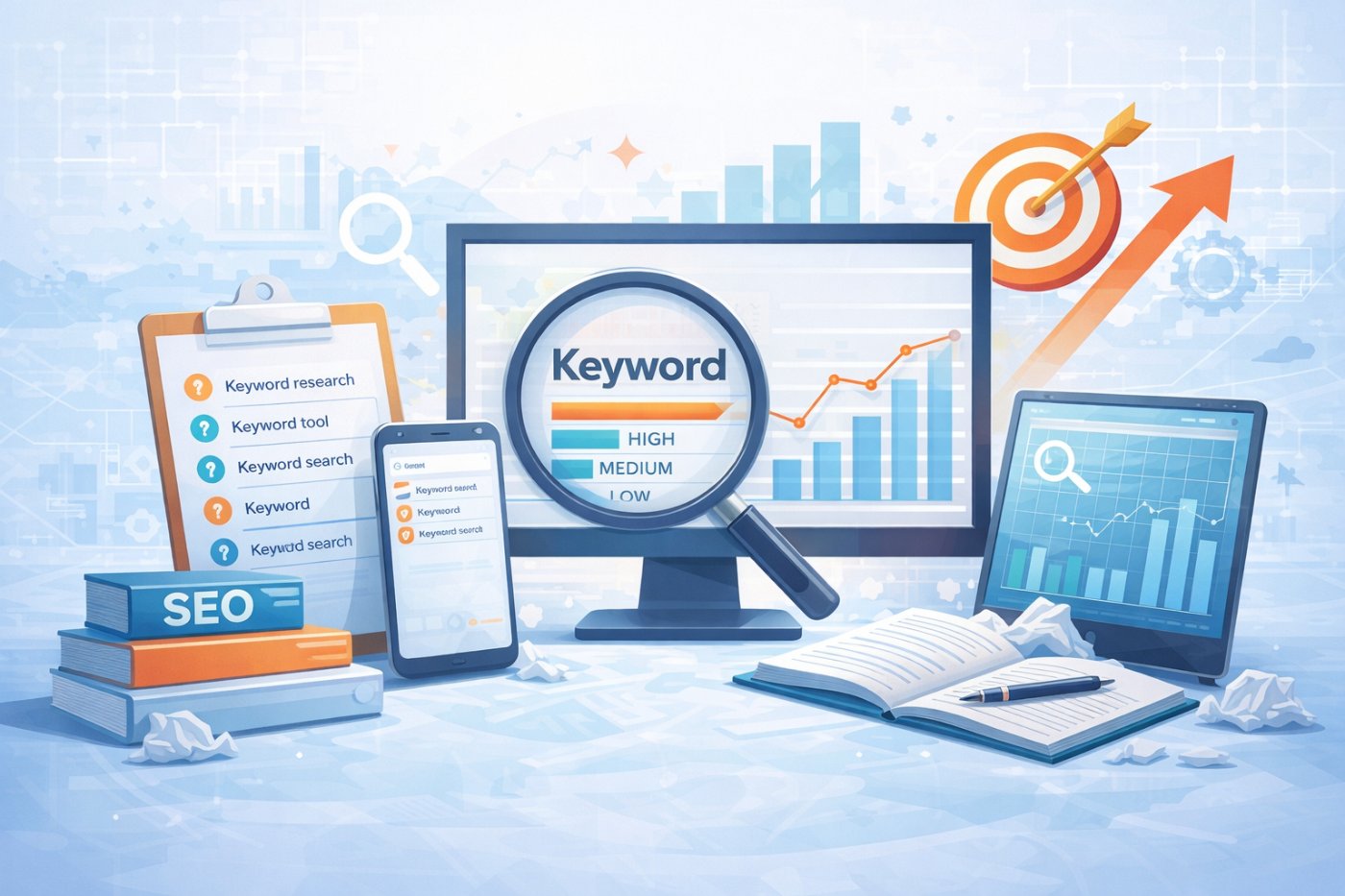
Before you write anything, ask: is there actual search volume behind this topic? Use a keyword tool, look at Google’s autocomplete, check the “People Also Ask” section. Find out what your audience is typing into Google and create content around those terms.
This also connects back to competitiveness. A high-volume keyword in a saturated niche is a long shot. A medium-volume keyword with less competition is a much smarter starting point, especially early on.
The best content strategy combines topics people are searching for with your genuine expertise on those topics. That’s where AI becomes a real asset. Once you know what to write about, AI helps you produce it faster and at a higher volume.
What Makes AI Content Rank
1. You Feed It What You Know
AI is only as good as what you put in. If you give it context, your own experience, specific examples from your business or industry, and real talking points, the output is completely different. That’s the difference between a blog that ranks and one that doesn’t, and the setup we use inside Claude is built around exactly that idea.
AI is a writing tool, not a knowledge source. You bring the knowledge. It helps you format, structure, and scale it.
2. You Validate the Information
AI makes mistakes and can state things confidently that are wrong. Before you publish anything, check the claims, look at credible sources, and cross-reference where it matters. Your credibility is on the line, not the AI’s.
Google’s E-E-A-T framework cares about trustworthiness. Publishing inaccurate information because AI said so will hurt your rankings and your reputation over time.
3. You Keep It Updated
Both Google and AI search engines favour recent content. A blog from two years ago gets outranked by a fresh post on the same topic, with some nuance attached. The other piece of content has been in the system longer, which may have more authority. You want to make sure you are bringing some new information to the table if you want to beat that, with everything else being equal.
If you’re using AI to publish content faster, use that speed advantage. Post consistently. Update old posts when things change in your industry.
4. You Edit It
Human editing is what separates average AI content from content that performs. Read it out loud. Add your voice and perspective. Cut anything that sounds generic or hollow. It should sound like a real person with real knowledge wrote it, because that person should be shaping every piece that goes out.
Does AI Content Show Up in AI Search? (ChatGPT, Claude, Perplexity, Gemini)
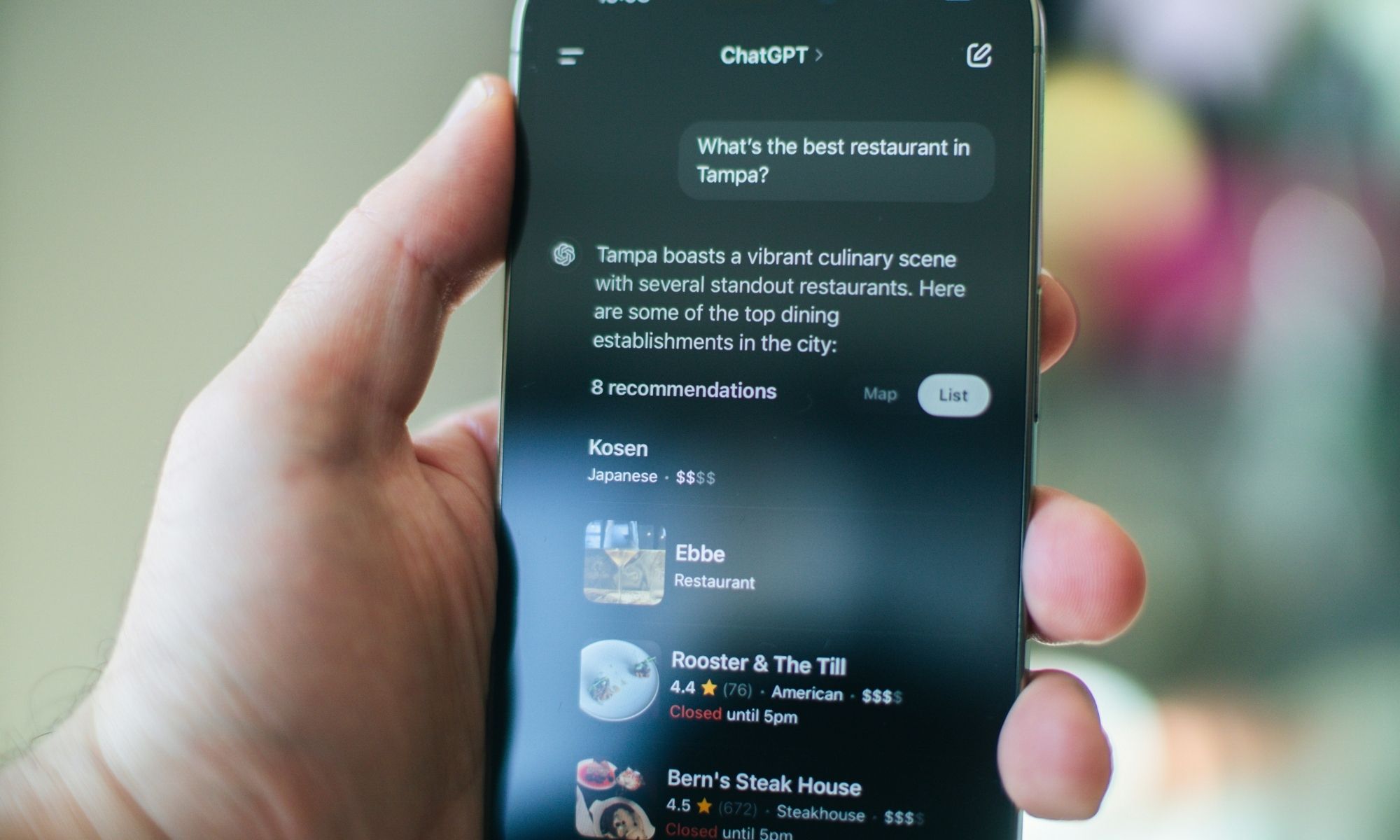
Yes, it does and there are ways that you can have AI choose you. AI search engines like ChatGPT, Claude, Gemini, and Perplexity pull from indexed web content and tend to cite recent, well-structured, authoritative sources.
AI search does not care if AI wrote the content. It cares if the content is useful, clear, and trustworthy. What helps your Google rankings tends to help your AI search citations too.
One thing worth knowing: some reports suggest AI search tools pull heavily from the most recent content available, even when accuracy isn’t verified. That’s a known issue in the space. It’s another reason to publish consistently and to make sure what you put out is accurate. You want to be both the most recent and the most reliable source on a given topic.

The SEO Basics Still Matter
Quality content gets you in the game. Proper SEO execution gets you in front of people. Don’t skip the fundamentals:
- Use your target keyword naturally in the title, first paragraph, and throughout the post
- Write clear H2 and H3 headers that answer specific questions
- Include a table of contents for longer posts
- Break up text with images, subheadings, and short paragraphs
- Make sure your page loads fast on mobile
- Add at least one internal link to another relevant page on your site
- Link to external websites that are research backed or support your claims
- Write a title and meta description that makes someone want to click
None of these are complicated. But most people skip half of them and then wonder why the content isn’t performing.

A Practical Checklist Before You Hit Publish
- Did you research the topic before writing? Is there actual search demand?
- Did you give the AI your own knowledge and perspective before it wrote anything?
- Did a human read and edit the full draft?
- Are all facts verified from credible sources?
- Is the content genuinely useful to someone who reads it?
- Are keywords included naturally, not stuffed?
- Does the page load quickly and read well on mobile?
- Is there a clear next step or call to action at the end? (Not necessary to rank, but helpful for your business to increase conversions, bounce rate, pages per session and other metrics)
Frequently Asked Questions About AI-Written Content
Is AI written content good for SEO?
It can be. The key is combining AI’s speed with your own expertise. Research the topic first, feed the AI what you know, edit the output, validate the claims, and apply basic on-page SEO. Done right, AI helps you produce more good content faster.
Can AI written content be detected?
Detection tools exist, but they are unreliable. Google has stated it does not use AI detection as a ranking signal. Focus on producing content that is genuinely helpful rather than trying to pass detection tests.
Does Google penalize AI content?
Google penalizes low-quality, spammy, or deceptive content regardless of the source. High-quality AI content is not penalized. The concern is mass-produced, unedited content that provides no real value to the reader.
Does competitiveness affect whether AI content ranks?
Yes, significantly. Local content in a less competitive space is much easier to rank than national or global content in a saturated niche. Understand where you’re competing before you set expectations. Start with keywords you can realistically win, then build from there.al value.
Consider This If You Want AI Written Content To Rank
AI content ranks. Human content ranks. Bad content from either source does not.
We’ve seen this firsthand across hundreds of pieces of content in multiple industries, including a digital marketing niche where the competition is as tough as it gets. AI-assisted content, done right, holds its own.
The businesses winning with content right now use AI as a tool, not a replacement for knowing the subject. They research before they write, bring their own expertise to every piece, edit, validate, and stay consistent (with emphasis on the consistency part).
That’s the formula. It’s not complicated. Most people just don’t follow it.
Want More Marketing Resources Built for Clinic Owners?
Cliniverse gives you the tools, templates, AI support, and community to run your own marketing without the agency price tag. Join for $200/month and get access to everything.
Related Articles
 AI & Tools
Does Google Penalize AI Content? What Claude's New Watermark Means for Your Clinic
Anthropic now watermarks Claude's AI text, but Google does not penalize content for being made with AI. Here is what the change means for your clinic.
Tash · August 23, 2026
 AI & Tools
How to Rank on AI Search Engines in 2026 (ChatGPT, Perplexity, Gemini, SearchGPT)
Learn how AI search engines rank businesses today. We explain AI Search SEO, trust signals, entity strength & the steps to show up in AI answers.
Tyler · November 29, 2025
 AI & Tools
What Is AEO (Answer Engine Optimization) and How Businesses Get Chosen by AI
What Answer Engine Optimization means, how AI tools decide which sites to quote, and the changes that make your content easier to reuse.
Tash · August 19, 2026
Run Your Own Clinic Marketing
Cliniverse gives you the ads, posts, courses, and AI to grow your clinic, with experts on call. You own everything you build.