
What Is Cliniko? An Honest Look for Canadian Clinics
Cliniko is one of the best-liked practice management platforms in the world. It's also, for the majority of Canadian clinics, the wrong choice, and the reason has nothing to do with the quality of the software.
Cliniko has no Canadian insurance billing. No TELUS eClaims, no WSIB, no HCAI, no OHIP. Its claiming features are built around Australian Medicare, New Zealand ACC, and UK insurers. If your clinic direct-bills extended health, that single fact ends the conversation before you get to pricing. If your patients pay up front and submit their own claims, Cliniko is genuinely good and worth the 30-day trial. Two things worth correcting in its favour: it bills Canadian clinics in Canadian dollars, and it stores Canadian accounts on Canadian servers.
We have not run Cliniko in a clinic ourselves. What follows is research rather than experience: pricing, integrations, and policies checked against Cliniko's own pages in July 2026, plus what practitioners report about living with it. We earn nothing either way here.
What Cliniko Is
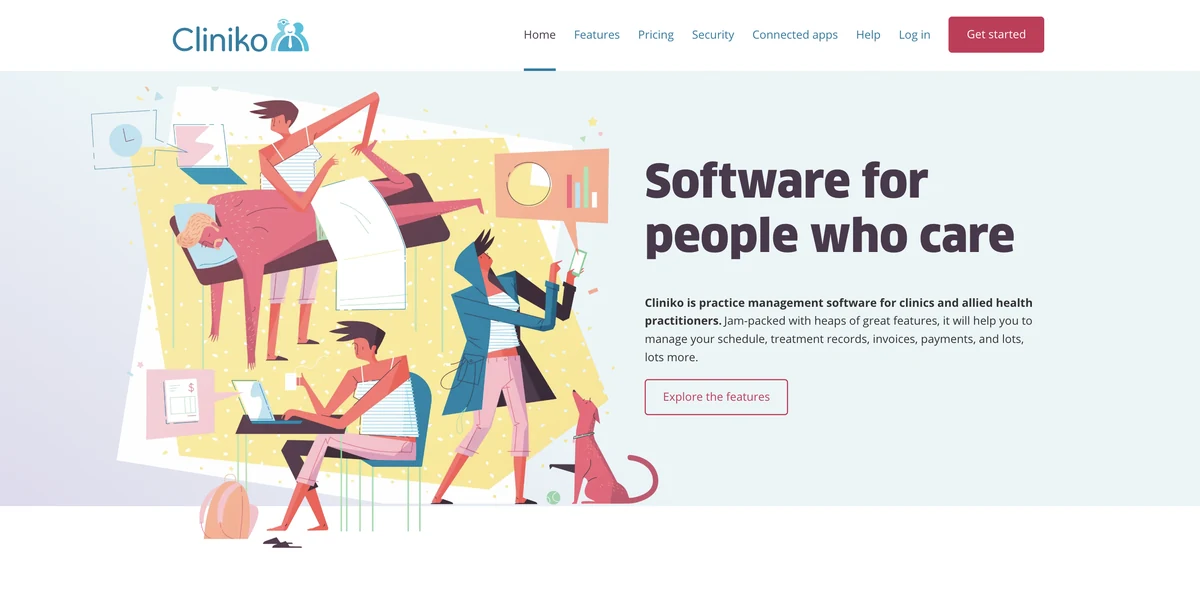
Cliniko is cloud practice management software built in Australia for allied health: physiotherapy, chiropractic, massage, podiatry, osteopathy, and similar. It covers scheduling, treatment notes, online booking, invoicing, telehealth, recalls, and reporting.
It has a strong international reputation, and much of it is earned. The interface is clean and the product is stable. Support is the one area where user accounts diverge: some practitioners praise the responsiveness, while others report waits of hours to two days and no weekend coverage, which stings when the weekend is the only time you have to set the thing up.
The thing to understand is who Cliniko is built for. Its home markets are Australia and the UK, and the product reflects that: the billing integrations, the claiming features, and the roadmap all point there first. Canadian clinics are welcome and supported, but they're not the centre of gravity, and the gaps below follow directly from that.
The Canadian Billing Problem
This is the part to settle before anything else, because for the majority of clinics reading this it's decisive.
We went through Cliniko's full connected-apps directory looking for Canadian insurance rails. Here is what exists:
- Australia: Tyro Health for Medicare, DVA and health fund claims, plus Medipass, HaltH, and Refr
- New Zealand: AC Connect and SubmitKit for ACC claims
- United Kingdom: Effra for UK health insurer billing
And here is what does not exist: TELUS eClaims, WSIB, HCAI, OHIP, Pacific Blue Cross PROVIDERnet, and Teleplan. There is no Canadian direct-billing integration in the directory at all.
What Cliniko can do is produce a properly itemised invoice with the codes a patient needs to submit their own claim. For a cash-pay clinic, that's fine and entirely normal. For a clinic where the front desk submits to Sun Life or Manulife while the patient puts their coat on, it means doing that work in a separate system, every time, forever.
That's not a small inconvenience to design around. It's a structural mismatch, and it's why we wouldn't put Cliniko in front of a typical Ontario physio or chiro clinic.
Cliniko Pricing
Cliniko charges by practitioner count band, and a Canadian clinic is quoted and billed in Canadian dollars.
| Practitioners | Monthly (CAD) |
|---|---|
| 1 | $49 |
| 2 to 5 | $99 |
| 6 to 8 | $149 |
| 9 to 12 | $199 |
| 13 to 25 | $299 |
| 26 to 200 | $399 |
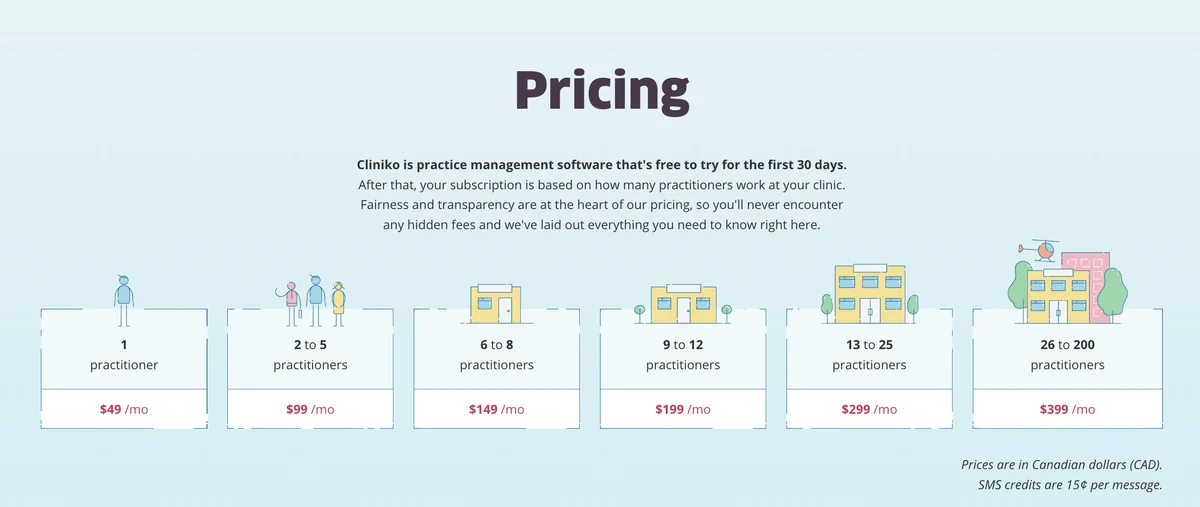
SMS credits are the one extra, at 15 cents per message.
The model is worth understanding because it's unusual and, in the right circumstances, generous. Cliniko charges by practitioner count band, not per seat. A clinic with five practitioners pays $99, the same as a clinic with two. If you're sitting at the bottom of a band you're paying for headroom you are not using; if you're at the top, you're getting good value.
Compare that with per-practitioner pricing elsewhere. A five-practitioner clinic on Jane's Practice plan pays $79 CAD plus four additional practitioners, landing well north of Cliniko's $99 CAD. On price alone Cliniko is one of the better-value options on this market. It's the billing gap below, not the cost, that rules it out for most Canadian clinics.
The free trial is 30 days, the longest of any platform we looked at across the Canadian market, and no credit card is needed to start. One caveat: a few features, telehealth among them, stay locked until you add card details.
Worth knowing about the company behind it. Cliniko was founded in Melbourne in 2011 by an osteopath and a developer, is bootstrapped with around 65 staff, and says over 65,000 health professionals use it. It has not raised its prices since 2011, which in this category is close to unheard of. Current pricing is always on the Cliniko pricing page, and remember to open it from Canada if you want the CAD figures.
What Cliniko Does Well
The product is well made. Scheduling, treatment notes with customisable templates, online booking, telehealth, recalls, invoicing, and reporting all work the way you'd expect, without the rough edges that show up in cheaper tools.
Your data stays in Canada. Cliniko being Australian invites the assumption that Canadian patient records sit in Sydney. They do not. Their security page puts it: "O Canada? Your account data will be stored securely in Canada, eh!" The infrastructure backs it up, with a Canadian shard documented in their API guide where keys ending -ca1 route to api.ca1.cliniko.com, and sharding exists because "some jurisdictions require medical data to remain within the country/region." Hosting is AWS, and the security page states Cliniko "meets or exceeds all regulations of the Australian Privacy Principles, GDPR, PIPEDA, and HIPAA." Region is set at signup, so create the account from Canada if this matters to you.
The pricing bands reward growth. Adding your third, fourth, and fifth practitioner costs nothing extra. Few platforms let you triple your team without the bill moving.
Every feature is on every tier. There's no feature gating between plans, and admin users, reception users, locations, file storage, and patients are all unlimited. You're paying for practitioner count alone, not for access to online booking or insurance codes the way you would on most competitors. Compare that with Noterro putting eClaims on its top tier, or ClinicSense putting review automation on its middle one.
Migration is free, and so is annual billing value. Cliniko's team will move your data across from most other practice management systems at no cost. Pay annually and you get a month free on top of the trial. There is also no minimum contract, and plan changes are prorated both ways.
Free for registered charities and educational institutions. Not a discount, free. If you run a community clinic under a registered charity, that's worth a conversation.
They do not discount, and they have not raised prices since 2011. Everyone pays the published rate, which means no negotiation and no sales pressure. Their pricing page states the rates have not moved since June 2011, not even for inflation.
The integration library is deep. Around a hundred connected apps, including Xero and QuickBooks for accounting, Mailchimp and similar for email, plus Zapier for everything else. The API is well documented and genuinely used, which matters if you want to build anything custom.
Multi-country operation. If you run clinics in more than one country, particularly if one of them is Australia, New Zealand, or the UK, Cliniko handles that better than a Canada-first platform would.
The 30-day trial is long enough to load real data and form an opinion rather than clicking through a demo.
Where to Look Closely
No Canadian insurance billing, covered above, and the single most important thing on this page.
Band pricing cuts both ways. A solo practitioner at $49 who takes on one part-time colleague jumps straight to $99, more than doubling the bill for one extra person. Check where you sit in a band before committing, because the second practitioner is the most expensive one you will ever add.
There is no native AI charting, by choice. Cliniko has not built an AI scribe, and their 2025 year in review says they tested AI for support work and concluded it "rarely lives up to what it promises." You can get AI notes through roughly thirty connected apps (Heidi, Perci, CliniScribe and others), but each is a separate subscription, a separate vendor, and a separate privacy review before patient data touches it. Compare that with Juvonno, which includes AI charting on every plan, or Jane, which sells it at $15 CAD per practitioner.
PHIPA is not named. Cliniko's security page commits to the Australian Privacy Principles, GDPR, PIPEDA, and HIPAA. Ontario's PHIPA is not on that list. Given the Canadian hosting described above the practical risk is low, but if you're an Ontario clinic that wants PHIPA named explicitly, ask them in writing.
SMS is not included, and it adds up. Every feature comes on every tier, but SMS reminders are pre-paid credits at 15 cents a message rather than part of the subscription. One long-time user reports spending roughly half their subscription again each month on SMS alone. If you run automated reminders across a full appointment book, price that in before you compare Cliniko's monthly figure against a platform that bundles messaging.
Multi-room scheduling is awkward. Practitioners who have run Cliniko in both group and solo practice report that it does not handle more than one treatment room well, and that the available setups each involve a compromise. For a single-room practice this never comes up. For a clinic juggling rooms against practitioner availability, test it properly during the trial.
Retail-style features are missing. There is no built-in digital gift voucher sale and no membership or subscription billing. Practitioners running massage and sports therapy businesses have flagged both, describing the gift voucher workaround as clumsy and time-consuming, which matters most heading into December. If packages, memberships, or gift cards are part of how you sell, look at ClinicSense, which builds those in.
Who Cliniko Fits
Cliniko is a reasonable choice for a Canadian clinic if your patients pay at the time of service and handle their own insurance claims, you are solo or small and want a well-built tool without a long contract, or you operate across multiple countries.
It's the wrong choice if you direct-bill extended health, if you handle WSIB or motor vehicle accident claims, or if you want to be billed in Canadian dollars. For most Canadian physio, chiro, and massage clinics, at least one of those applies.
If you are weighing it against the alternatives, Jane App is the common Canadian default, Noterro is the value option with eClaims on its top tier, and Juvonno goes deepest on billing including HCAI and OHIP. We compared all nine platforms in the best clinic software for Canadian clinics.
Whichever you choose, the software will run your clinic and it will not grow it. Filling the schedule and getting found when someone searches for a physio in your city is a separate job, and it is the one we handle through done-with-you clinic marketing.
Frequently Asked Questions About Cliniko
What is Cliniko used for?
Cliniko is practice management software for clinics and allied health practitioners. Clinics use it to manage appointment calendars and online bookings, write and store treatment notes and patient health records, run invoicing and payments, hold telehealth video consultations, send appointment reminders, and produce business reports. It is used by physiotherapists, chiropractors, massage therapists, podiatrists, osteopaths, and mental health practitioners, and is deliberately built to work across allied health rather than being tailored to one profession.
How much does Cliniko cost?
For a Canadian clinic, Cliniko charges by practitioner count band in Canadian dollars: $49 for one practitioner, $99 for two to five, $149 for six to eight, $199 for nine to twelve, $299 for thirteen to twenty-five, and $399 for twenty-six to two hundred. Pricing is localised by country, so a visitor from the United States sees US dollar figures on the same page. Every feature is included on every plan, with unlimited admin users, reception users, locations, and patients. The only extras are SMS credits at 15 cents per message and any paid third-party apps you connect. Cliniko says its prices have not changed since it launched in June 2011.
Is there a free version of Cliniko?
There is no permanently free plan, and the 30-day trial is covered above. Two details that are easy to miss. If you never enter payment details, the account closes itself when the trial ends, so there is nothing to cancel and no risk of an unexpected charge. If you do enter a card, billing starts automatically at the end of the trial, though Cliniko emails a reminder five days beforehand. And registered charities and educational institutions get Cliniko free outright rather than discounted, which is worth a conversation if you run a community clinic.
Is Cliniko safe and secure?
Cliniko encrypts data in transit and at rest, backs up daily across multiple physical locations, monitors systems around the clock, and supports passkeys, two-factor authentication, and role-based user permissions you can use to keep clinical notes away from front-desk accounts. They also run a bug bounty for responsibly disclosed vulnerabilities, which is a reasonable signal for a company of their size. Two things you control: turn on two-factor for every user, and be selective about which connected apps you hand your API key to, since those apps sit outside Cliniko's security perimeter.
Does Cliniko work with TELUS eClaims?
No. Cliniko has no TELUS eClaims integration, and no Canadian insurance direct-billing integration of any kind. Its connected-apps directory covers Australian Medicare and health fund claiming through Tyro Health and Medipass, New Zealand ACC claiming, and UK health insurer billing through Effra. Cliniko can generate itemised invoices that patients submit themselves, but a Canadian clinic that direct-bills would need a separate system to do it.
Is Cliniko good for Canadian clinics?
One question decides it: does your front desk submit insurance claims for patients? If yes, Cliniko is not workable, because there is no TELUS eClaims, WSIB, HCAI, or OHIP integration. If your patients pay at the desk and claim it back themselves, the answer flips and Cliniko becomes a strong option at a fair price.
Cliniko vs Jane App: which is better for a Canadian clinic?
For a Canadian clinic, Jane is the more practical choice in most cases, and insurance billing is the reason. Jane integrates with TELUS eClaims, Teleplan, and Pacific Blue Cross PROVIDERnet; Cliniko has no Canadian billing integrations at all. Both bill Canadian clinics in Canadian dollars and both store Canadian data in Canada, so those are not points of difference. Cliniko's advantages are its 30-day trial against Jane's demo-only evaluation, band pricing that can work out cheaper for a growing team, and every feature being included on every plan. If you direct-bill, Jane wins regardless.
How many clinics use Cliniko?
Cliniko says more than 65,000 healthcare professionals around the world use it. That is a global figure rather than a Canadian one, and its Canadian footprint is considerably smaller: search demand for Cliniko in Canada runs at roughly a twentieth of its worldwide level. The absence of Canadian insurance billing is the most likely explanation for that gap.
Does Cliniko work on a phone?
Yes. Cliniko is fully cloud-based and runs in a web browser on computers, tablets, and phones, with a calendar designed to work on smaller screens. There is no separate desktop install to maintain, and updates happen automatically.
Where is Cliniko based, and where is my data stored?
Cliniko is an Australian company, founded in Melbourne in 2011, and its claiming features reflect that. The data question has a better answer than its reputation suggests. Cliniko shards its infrastructure by region, and accounts created in Canada are stored in Canada rather than Australia. Their API documentation confirms a Canadian shard, with keys ending -ca1 routing to api.ca1.cliniko.com, and states that sharding exists partly because some jurisdictions require medical data to stay in-country. Their security page commits to PIPEDA, though it does not name Ontario's PHIPA specifically. Region is chosen at signup, so confirm it when you create the account.
Related Articles
 AI & Tools
Should You Use Juvonno? What Clinic Owners Should Know
Juvonno is a Canadian-built clinic management platform with deep billing and multi-location support. Here's what clinic owners should know before deciding.
Tyler · July 5, 2026
 AI & Tools
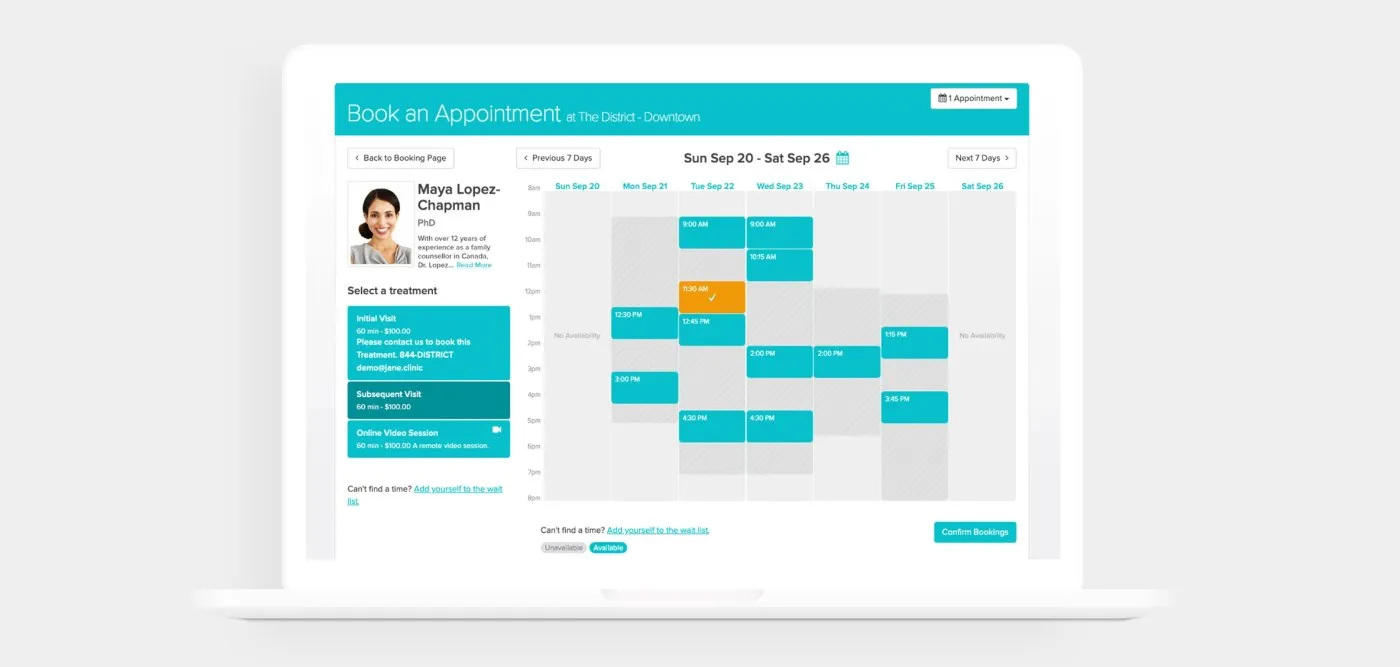
What Is Jane App? An Honest 2026 Overview for Clinic Owners
Jane App is a Canadian-built practice management platform for clinics. Here's an honest 2026 overview from a team that works with clinics on Jane every day.
Tyler · May 27, 2026
 AI & Tools
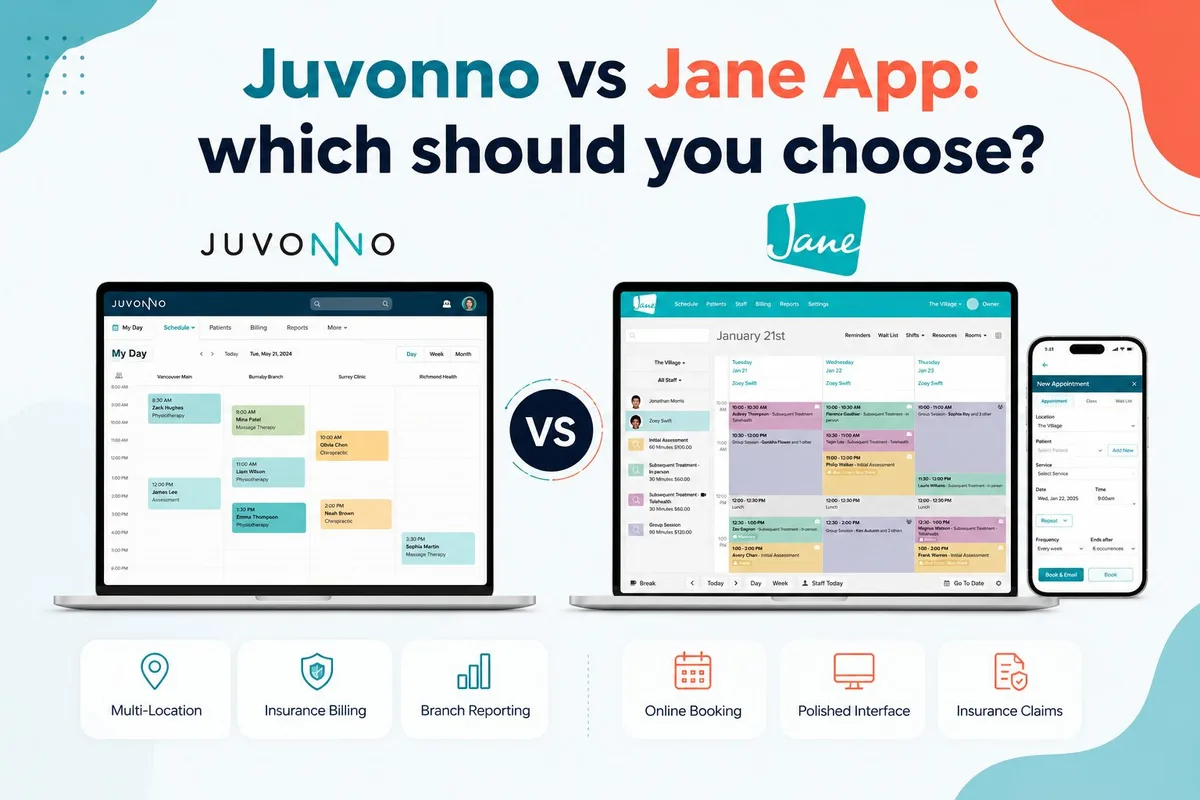
Juvonno vs Jane App: Which Clinic Software Fits You?
An honest Juvonno vs Jane App comparison for Canadian clinics. Pricing, billing, multi-location, interface, and who each one fits best.
Tyler · July 19, 2026
Run Your Own Clinic Marketing
Cliniverse gives you the ads, posts, courses, and AI to grow your clinic, with experts on call. You own everything you build.