
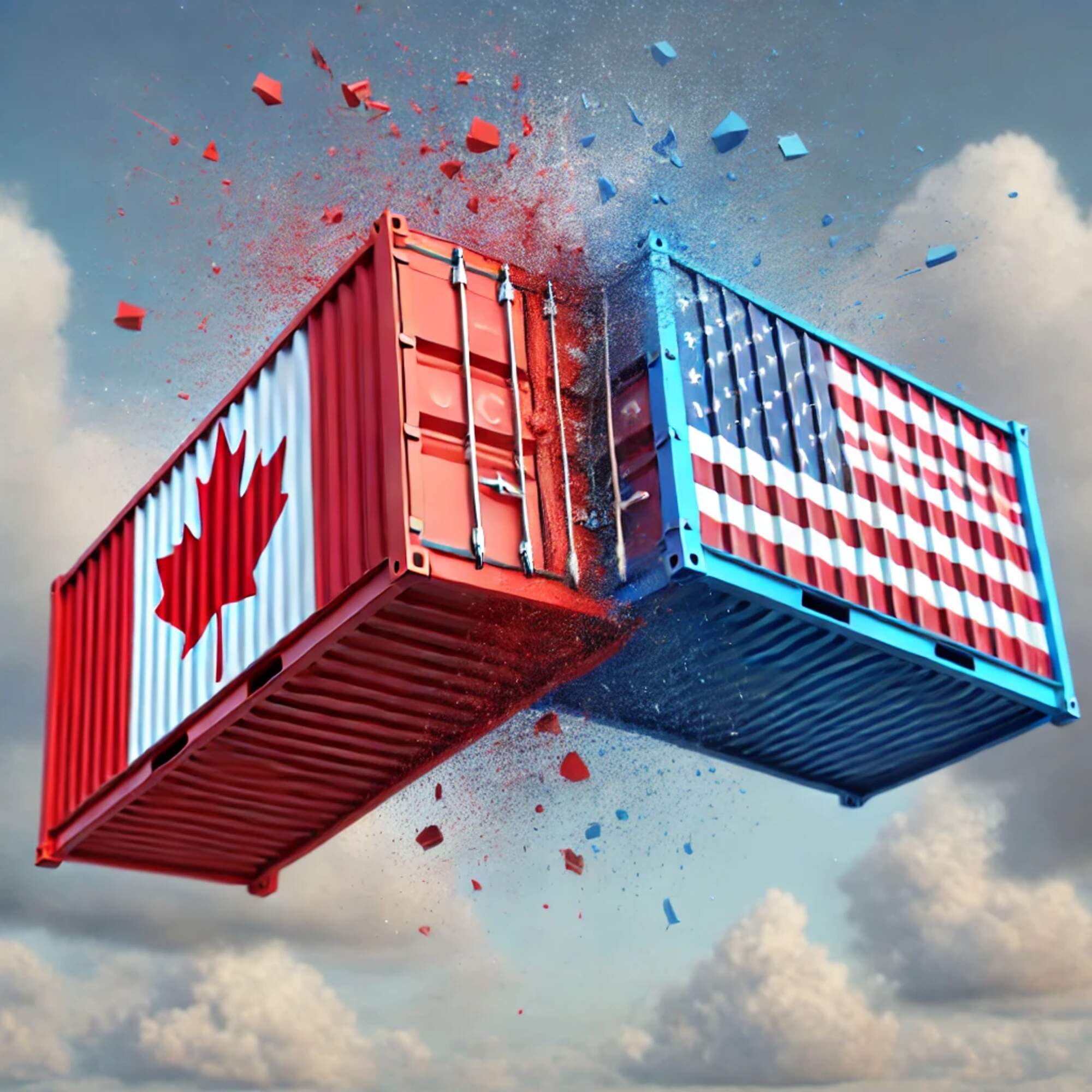
Canada-U.S. Trade War And Its Costly Impact On Businesses
The escalating trade tensions between Canada and the United States have led to significant economic implications for businesses and consumers on both sides of the border. In early 2025, the U.S. administration imposed a 25% tariff on Canadian imports, citing concerns over illegal immigration and drug trafficking. In response, Canada announced retaliatory tariffs of 25% on a wide range of U.S. goods, including alcohol, produce, and household items.
These measures have raised concerns about increased costs for businesses that rely on cross-border trade, potential supply chain disruptions, and higher prices for consumers. Industries such as automotive, agriculture, and manufacturing are particularly vulnerable to the effects of these tariffs.
As the situation evolves, it’s crucial for businesses to stay informed about policy changes and consider strategies to mitigate potential impacts. This includes exploring alternative supply chains, adjusting pricing models, and engaging in advocacy efforts to promote fair trade practices.
Key Takeaways
- The U.S. imposed a 25% tariff on Canadian imports, prompting Canada to retaliate with tariffs on $106.6 billion worth of U.S. goods.
- Key industries affected include manufacturing, agriculture, automotive, retail, and energy, leading to higher costs and supply chain disruptions.
- Businesses can adapt by strengthening digital marketing, diversifying supply chains, adjusting pricing strategies, and improving customer engagement.
- SEO, social media, and paid advertising are crucial for maintaining visibility and retaining customers during economic uncertainty.
- Companies that act early and refine their strategies will be better positioned to succeed in a rapidly changing trade environment.

Understanding Tariffs: What They Are and How They Work
Before diving deeper into the Canada-U.S. trade war, it’s essential to understand what tariffs are, how they function, and how they differ from traditional taxes. This conflict has also drawn significant political attention, with figures like Donald Trump and Justin Trudeau playing central roles in shaping these policies.

What Is a Tariff?
A tariff is a tax or duty imposed by a government on imported or exported goods. Governments use tariffs to regulate trade, protect domestic industries, or retaliate against other nations in trade disputes. In most cases, tariffs make imported goods more expensive, encouraging consumers to buy domestically produced alternatives.
For example, if the U.S. imposes a 25% tariff on Canadian steel, that means American companies importing steel from Canada must pay an additional 25% tax on top of the original price. This increases costs for businesses that rely on Canadian steel, ultimately affecting industries like automotive manufacturing and construction. Policies introduced during Donald Trump’s administration amplified the current trade tensions, laying the groundwork for the ongoing economic disruptions.
Tariff vs. Tax: What’s the Difference?
While tariffs and taxes both involve payments to the government, they serve different purposes:
While tariffs are often political tools, traditional taxes serve more general government funding purposes. Justin Trudeau’s administration has pushed back against tariffs imposed by the U.S., arguing that they hurt cross-border partnerships and economic growth.
How Do Tariffs Work?
Tariffs function as a trade barrier, influencing the cost and availability of goods. Here’s how they impact businesses and economies:
- Price Increase on Imports When a tariff is imposed, the cost of imported goods rises, making them less competitive against locally made products.
- Retaliation and Trade Wars Countries affected by tariffs often respond with their own tariffs, leading to a trade war where both sides increase import costs for businesses and consumers.
- Revenue for Governments Tariffs generate revenue, but this is often offset by the economic damage caused by disrupted supply chains and higher prices.
- Impact on Supply Chains Businesses that rely on foreign materials (like car manufacturers needing steel) face higher costs, which can be passed down to consumers.
In the case of the Canada-U.S. trade war, the imposed tariffs are already impacting industries like agriculture, automotive, and retail, with businesses scrambling to adjust to increased costs and shifting trade policies.
Understanding how tariffs work is crucial for businesses navigating these economic challenges. In the next section, we’ll break down why the Canada-U.S. trade war is happening and how it’s affecting key industries.
The Economic Impact of Tariffs: How Businesses and Consumers Are Affected
The Canada-U.S. trade war and the tariffs imposed by both governments have widespread economic consequences, affecting industries, businesses, and consumers. While tariffs are often implemented as a political tool to protect domestic industries, they often result in higher costs, supply chain disruptions, and slower economic growth. Both Donald Trump’s hardline trade policies and Justin Trudeau’s retaliatory measures have been focal points in this ongoing economic conflict.
Here’s how these tariffs are impacting the economy:
Higher Costs for Businesses
When tariffs are applied to imported goods, businesses that rely on those products face increased costs. For example:
- U.S. companies importing Canadian steel and aluminum must now pay an extra 25% due to new tariffs.
- Canadian retailers sourcing U.S. agricultural products are seeing price hikes, affecting everything from grocery prices to restaurant costs.
Many businesses must choose between:
- Passing the cost onto consumers, leading to higher retail prices.
- Absorbing the cost, which cuts into profit margins and may lead to job cuts or slower growth.
Inflation and Rising Consumer Prices
As businesses face higher costs, those expenses often trickle down to consumers.
- Everyday products, groceries, electronics, household goods, and automobiles, are becoming more expensive due to increased tariffs on raw materials and finished goods.
- The added costs contribute to inflation, making it harder for households to afford essentials.
For example, in previous trade wars, tariffs on goods like washing machines resulted in a 12% price increase for consumers in the U.S. and Canada. Similar price hikes are already being observed in food, construction materials, and auto parts.
Supply Chain Disruptions and Trade Uncertainty
Many businesses depend on international supply chains to source raw materials and products. When tariffs are introduced:
- Supply chains are disrupted as companies look for new suppliers to avoid higher costs.
- Uncertainty makes businesses hesitant to sign long-term contracts, expand operations, or invest in new technology.
- Manufacturers may relocate production to other countries to bypass tariffs, leading to job losses in affected regions.
Several automotive companies have warned that tariffs on imported steel and aluminum could increase vehicle prices and force production shifts outside North America.
Retaliation and Escalation in the Trade War
Trade wars don’t happen in isolation, when one country imposes tariffs, the other often retaliates with its own.
- Canada’s 25% tariffs on U.S. goods (including alcohol, produce, and household items) are a direct response to U.S. tariffs.
- This back-and-forth leads to a negative spiral, where businesses in both countries face higher costs and reduced market access.
Economic Growth Slowdown
Tariffs can reduce overall trade activity, leading to slower economic growth.
- When companies pay more for imports, they have less money to invest in expansion, hiring, and innovation.
- Export-dependent businesses suffer when foreign buyers turn to countries with lower trade barriers.
Past trade wars have resulted in billions of dollars in lost trade, decreased business confidence, and even stock market volatility.
Who Wins and Who Loses?
Potential Winners:
- Domestic producers (at least in the short term) who benefit from reduced foreign competition.
- Governments collecting tariff revenue.
Losers:
- Import-reliant businesses and manufacturers.
- Consumers facing rising costs.
- Companies dependent on global supply chains.
- Exporters who lose access to key markets.
The Long-Term Impact
If tariffs remain in place for an extended period, businesses may:
- Relocate production to avoid tariffs.
- Change sourcing strategies to work with different suppliers.
- See reduced sales and profits due to higher prices and weaker consumer demand.
The Canada-U.S. trade war is still unfolding, and its full economic impact is yet to be seen. However, one thing is clear, tariffs are reshaping the way businesses operate, and companies that adapt quickly will be in the best position to thrive in this changing trade environment.
Next, we’ll break down which industries are being hit the hardest by the ongoing trade war and how they’re responding.
Key Industries Affected by the Canada-U.S. Trade War
The ongoing trade war between Canada and the United States is having a significant impact on multiple industries, particularly those that rely heavily on cross-border trade. Tariffs on raw materials, agricultural products, and consumer goods are increasing costs for businesses, disrupting supply chains, and affecting both Canadian and American consumers. Below are the industries being hit the hardest by the tariffs.
Manufacturing
The manufacturing sector is one of the most heavily affected industries due to tariffs on steel, aluminum, and industrial components. Many manufacturers in both Canada and the U.S. rely on materials from across the border, and with tariffs driving up costs, companies are facing difficult decisions.
- Higher production costs are leading to increased prices for finished goods.
- Some manufacturers are shifting supply chains to other countries or regions to offset costs.
- Smaller manufacturers, particularly those without the resources to absorb increased expenses, are struggling to remain competitive.
**Example:**The automotive industry is a prime example of how tariffs on steel and aluminum impact manufacturing. Car manufacturers that rely on Canadian or U.S. materials now face higher costs, potentially leading to higher vehicle prices for consumers.

Agriculture & Food Industry
Agricultural exports and imports between Canada and the U.S. are a major part of the economies of both nations. Tariffs on meat, dairy, grains, and produce are directly impacting farmers, distributors, and consumers.
- Canadian and U.S. farmers who depend on cross-border trade are facing lower demand due to retaliatory tariffs.
- Consumers are experiencing higher prices on staple food items such as fruits, vegetables, and dairy products.
- Food processing companies that rely on cross-border ingredients are adjusting their pricing or looking for alternative suppliers.
Example: Canadian dairy exports to the U.S. are now subject to steep tariffs, making it harder for Canadian farmers to compete in the U.S. market. Similarly, American agricultural exports to Canada, including wheat and pork, are facing reduced demand due to retaliatory tariffs.

Automotive Industry
The automotive sector relies on a deeply interconnected supply chain between Canada and the U.S. Many car parts are manufactured in one country, assembled in the other, and sold across North America.
- Tariffs on steel and aluminum are increasing the cost of vehicle production.
- Auto manufacturers may be forced to increase car prices or cut costs elsewhere (such as reducing jobs or scaling back production).
- The complexity of cross-border trade in the auto sector makes it difficult to quickly adjust to sudden tariff changes.
Example: Major car manufacturers have warned that tariffs could add thousands of dollars to the cost of new vehicles, making them less affordable for consumers.

Retail & Consumer Goods
Retailers and e-commerce businesses that sell imported products are also seeing an impact, as tariffs are driving up costs for clothing, electronics, furniture, and household goods.
- Businesses that import goods from the U.S. or Canada are passing costs onto consumers through price increases.
- Supply chain disruptions are leading to longer delivery times and potential inventory shortages.
- Large retailers may be able to absorb some costs, but smaller businesses with tighter margins are being hit the hardest.
Example: Tariffs on U.S. household goods and electronics imported to Canada mean that Canadian consumers are paying more for essential items, while U.S. retailers face a drop in demand from Canadian buyers.

Energy & Natural Resources
The energy sector, particularly oil, gas, and minerals, plays a significant role in cross-border trade between Canada and the U.S. Tariffs and trade barriers in this sector can have widespread economic effects.
- Increased tariffs on industrial equipment and pipeline materials raise operational costs for energy companies.
- Regulatory uncertainty surrounding tariffs can impact investment decisions in major energy projects.
- Export-dependent companies may look for alternative markets outside North America to offset losses.
Example: Canada is one of the largest suppliers of crude oil to the U.S., and any restrictions or increased tariffs on energy products could disrupt North America’s energy market.

Technology & Telecommunications
The tech industry depends on a global supply chain for semiconductors, computer parts, and electronics. Tariffs on high-tech components make it harder for companies to keep costs low and stay competitive.
- Rising import costs could lead to higher prices on consumer electronics such as smartphones, laptops, and smart devices.
- Companies relying on North American supply chains may shift production to Asia or Europe to avoid tariff-related price hikes.
- Startups and smaller tech companies with fewer resources could struggle to compete with larger firms that can absorb costs.
**Example:**Tech giants with supply chains spanning multiple countries are navigating shifting trade policies to minimize the impact of tariffs on their production costs.

What This Means for Businesses
As the Canada-U.S. trade war continues, businesses across industries are being forced to adapt. Some companies are looking for alternative suppliers, while others are increasing prices or cutting costs elsewhere to remain competitive. Consumers, in turn, are feeling the pinch through higher prices on everyday goods.
What’s Next? In the following section, we’ll explore how businesses can navigate the trade war, adapt their strategies, and remain competitive despite rising costs and supply chain disruptions.

How Businesses Can Navigate the Canada-U.S. Trade War
The ongoing trade war between Canada and the U.S. is forcing businesses to rethink their strategies and adapt to a changing economic landscape. Whether it’s rising costs, disrupted supply chains, or shifting consumer demand, companies must stay agile to remain competitive. While digital marketing plays a key role in helping businesses adjust, there are also other critical areas to focus on. Below are strategies businesses can implement to mitigate risks and maximize opportunities during this trade war.
Strengthen Digital Marketing and E-Commerce Strategies
As supply chains shift and costs fluctuate, businesses need effective digital marketing to maintain visibility, attract customers, and drive sales. A strong online presence can help companies weather economic uncertainty and build direct relationships with consumers, reducing reliance on traditional sales channels.
Invest in SEO & Content Marketing:
- Optimize websites to rank higher in search results, helping attract organic traffic without relying solely on paid advertising.
- Use blog content and educational resources to position your business as an authority in your industry.
- Example: If tariffs increase product prices, create content showcasing why your product is still the best value option despite higher costs.
Leverage Paid Advertising Efficiently:
- As competition rises, smart Google Ads and social media campaigns can drive targeted traffic to your products or services.
- Focus on retargeting strategies, ensuring that those who visit your website are reminded of your brand.
- Adjust bidding strategies to maximize return on ad spend (ROAS) as marketing costs fluctuate.
Optimize for Mobile & Social Commerce:
- More consumers are shopping online due to supply chain disruptions and price changes. Make sure your website is mobile-friendly, fast, and optimized for e-commerce.
- Take advantage of shoppable social media posts on Instagram, Facebook, and TikTok to drive direct conversions.
Build an Email Marketing List & Strategy:
- Email campaigns are one of the most cost-effective ways to keep customers engaged, offer exclusive deals, and drive repeat business.
- Provide value through loyalty programs, discounts, and informative newsletters about product availability, pricing updates, and industry trends.

Adapt Supply Chain and Sourcing Strategies
Businesses that depend on cross-border suppliers should explore ways to reduce dependency on tariff-affected goods and find alternative sourcing options.
Diversify Suppliers & Manufacturing Partners:
- Look for domestic suppliers to minimize tariff costs and reduce import dependency.
- Expand partnerships to other international markets outside of North America that may offer lower trade barriers.
Increase Inventory Reserves Where Possible:
- If possible, stockpile critical materials before tariffs increase further.
- Work with supply chain partners to negotiate better pricing and bulk order discounts.
Leverage Automation & AI for Logistics Optimization:
- AI-driven logistics solutions can help businesses identify cost-saving opportunities, such as efficient shipping routes, bulk order optimization, and predictive demand forecasting.
Adjust Pricing & Offer Strategic Discounts
With rising costs due to tariffs, businesses must carefully adjust pricing without alienating customers.
Value-Based Pricing:
- Instead of simply increasing prices, highlight your product’s unique value to justify the cost to customers.
- Create tiered pricing options to give consumers flexibility based on budget constraints.
Offer Free Shipping or Bundled Discounts:
- Consumers dislike unexpected shipping fees at checkout, offer free shipping over a certain purchase amount to encourage larger orders.
- Introduce limited-time promotions on tariff-affected items to maintain demand.
Introduce Subscription or Loyalty Programs:
- Reward repeat customers with exclusive deals and perks, helping to increase customer retention and lifetime value.
- Use a tiered membership model (e.g., free vs. premium memberships) to offer incentives for higher spending customers.
Strengthen Customer Relationships and Brand Loyalty
Transparency Is Key:
- Communicate openly about price changes due to tariffs so customers understand why costs are shifting.
- Use email, website announcements, and social media to keep your audience informed.
Focus on Customer Experience & Retention:
- Exceptional customer service can set businesses apart when competition is high.
- Offer live chat support, hassle-free returns, and responsive communication to maintain trust and loyalty.
Leverage Social Proof & User-Generated Content:
- Display verified reviews, customer testimonials, and user-submitted content to build trust and increase conversion rates.
- Encourage satisfied customers to share their experiences on social media through influencer partnerships or user-generated content campaigns.

Explore Global Markets & New Revenue Streams
Expand Beyond the U.S. & Canada:
- If tariffs make North American trade difficult, look for new opportunities in European, Asian, or Latin American markets.
- Consider marketplace expansion on platforms like Amazon, eBay, or niche international marketplaces.
Diversify Revenue Streams:
- If your business is heavily reliant on physical goods, explore digital product offerings, memberships, or services to generate additional revenue.
- Example: If you sell physical goods affected by tariffs, consider adding online courses, consulting services, or exclusive premium content.
Stay Informed and Advocate for Your Industry
Monitor Trade Policy Updates & Economic Trends:
- Keep track of government trade announcements to anticipate changes and adapt quickly.
- Follow industry news and economic reports to stay ahead of competitors who may not be adjusting as quickly.
Engage in Industry Advocacy:
- Join trade associations and business coalitions that advocate for fair trade policies.
- Participate in discussions with policymakers to support solutions that benefit your industry.
The Bottom Line to the Canada-U.S. Trade War
The Canada-U.S. trade war is creating challenges for businesses across industries, but strategic digital marketing, supply chain diversification, and pricing adjustments can help companies stay competitive despite rising costs.
By leveraging SEO, social media, email marketing, and automation, businesses can not only navigate the uncertainty but also position themselves for long-term success.
If you need help adjusting your digital marketing strategy to maximize visibility and conversions in this shifting economic landscape, let’s talk. Contact us today to see how we can help.
Related Articles
 Case Studies & News
What Google’s New AI Search Bar Changes for Your Local Business
Google's new AI Mode is a tab today, but the rollout could widen. Here's what it looks like for local businesses and the 3-part check to get ahead.
Tash · May 25, 2026
 Get Found Online
Apple Business Launched: What It Means for Local Businesses
Apple just folded Business Connect, Manager, and Essentials into one free platform called Apple Business, and Maps ads are rolling out this summer.
Tyler · April 17, 2026
 Get Found Online
2026 Digital Marketing Trends: What Every Business Needs To Know
Here are the 2026 digital marketing trends that matter most and the priorities every business should focus on to stay competitive this year.
Tash · December 8, 2025
Run Your Own Clinic Marketing
Cliniverse gives you the ads, posts, courses, and AI to grow your clinic, with experts on call. You own everything you build.