
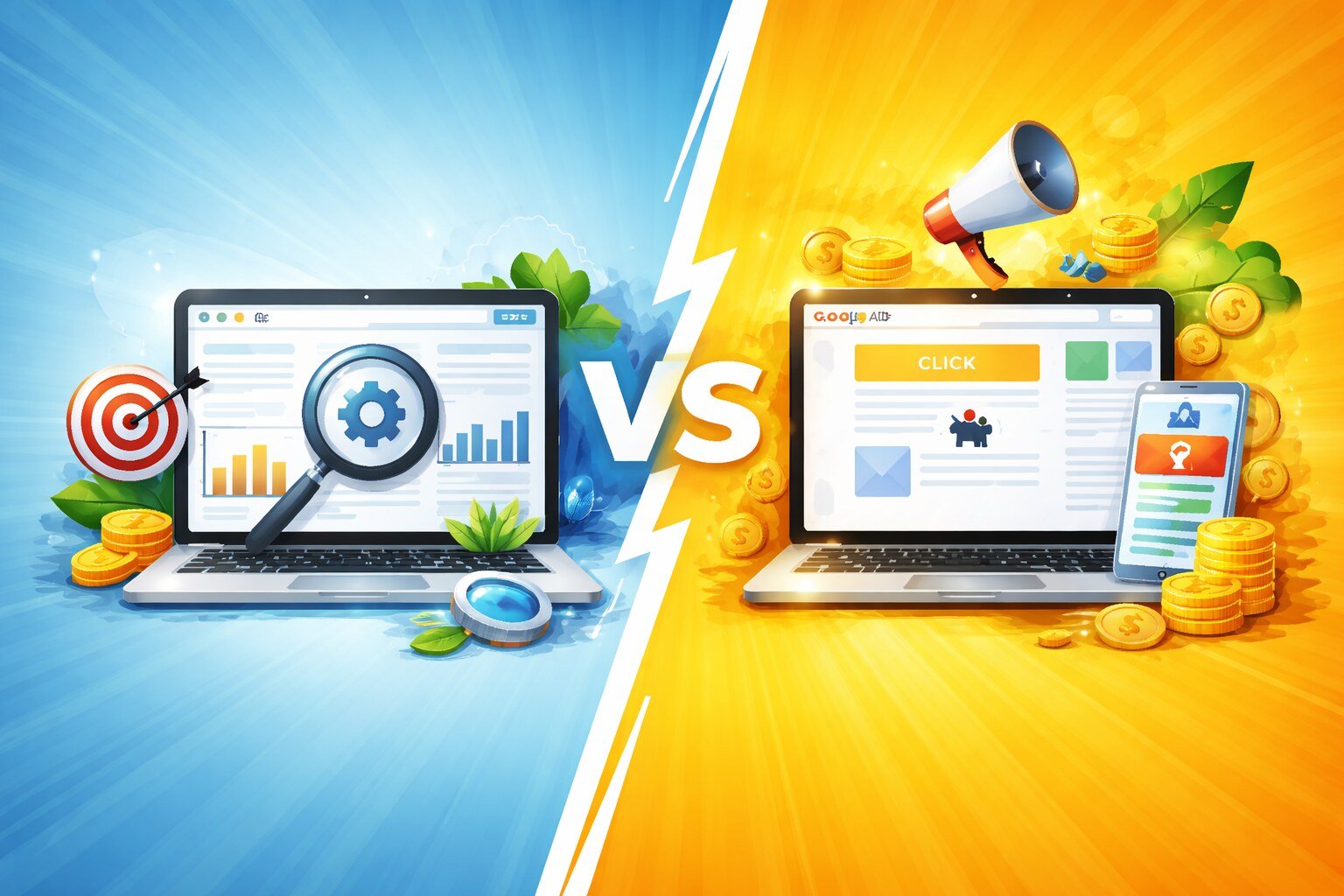
SEO vs Google Ads: Which is Better in 2026?
You’ve got two ways to show up on Google. You can pay to skip the line. Or you can do the work to earn your spot.
That’s Google Ads vs. SEO in a sentence.
Both work. Both have real tradeoffs. And for small business owners, picking the right one at the right time can change your entire growth trajectory.
Let’s break it all down so you can make a smart decision, not just a fast one.
What Is SEO?
SEO stands for search engine optimization. It’s the process of making your website and online presence easy for search engines to find, understand, and recommend.
There’s a technical side to it. But most of it is simpler than people think. Filling out your Google Business Profile. Building the right pages on your website. Writing helpful content your customers are searching for. Getting reviews.
None of that requires a developer. It just requires consistency.
The payoff? You show up organically in search results. No ad spend required. And when you rank, you own that position. Nobody takes it away when you stop paying. Because there’s nothing to stop paying.
What Are Google Ads?
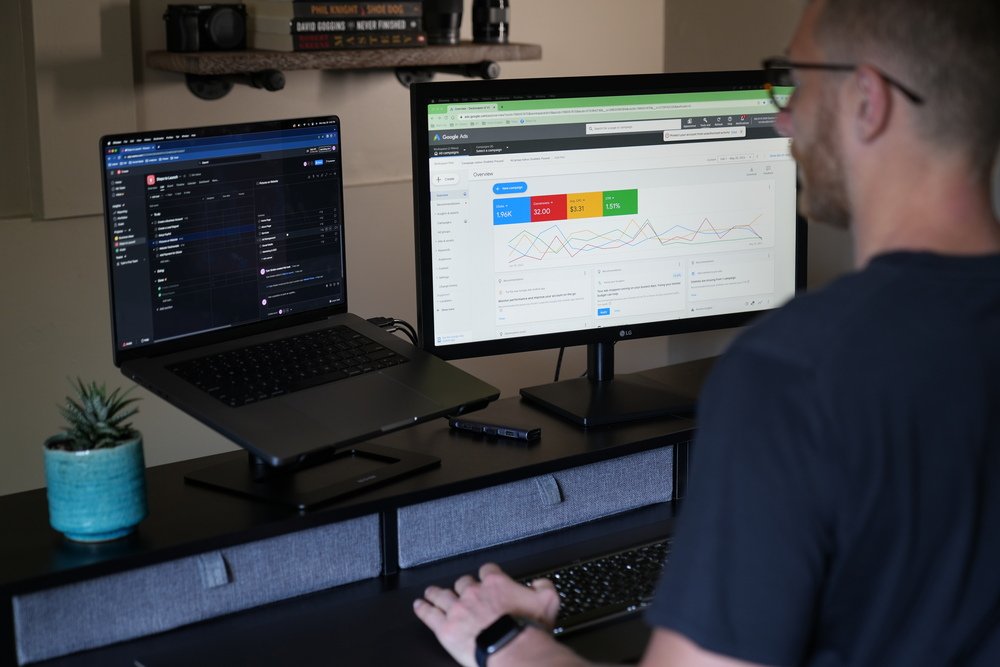
Google Ads lets you pay to appear at the top of search results immediately. You set a budget, choose your keywords, and when someone searches those terms, your ad shows up.
You’re paying to skip the line. That can be powerful, especially when you’re just starting out and your SEO hasn’t had time to build yet. If paid ads are where you want to begin, the next question is usually Meta Ads or Google Ads first. Here’s a deeper look at how to set your Google Ads budget once you decide.
But the moment you stop paying, you disappear: no traffic, no leads, nothing.
That’s the core tradeoff.
The Difference: What You Own vs. What You Rent
Think about it this way.
SEO is like buying a building. It takes time and upfront effort, but once it’s yours, it works for you every single day.
Google Ads is like renting space in that building. Immediate access, easy to start. But you pay every month, and the day you stop, you’re out.
Neither one is wrong. The mistake is only ever renting.
SEO: The Long Game That Compounds
SEO doesn’t pay off in week one. It takes months to build. But here’s what most business owners miss: it compounds.
Every blog post you publish, every page you build, every review you earn stacks. Six months from now, you’re getting traffic you didn’t pay for. A year from now, you’re getting leads on autopilot.
The best part? Good SEO doesn’t just show up on Google. It shows up in AI search engines too.
Google Ads: The Fast Lane with a Meter Running
Google Ads gets you in front of customers today. That’s valuable when you’re launching, adding a new service, or just want to fill your pipeline fast.
You also get serious targeting control: search ads, display, video, Performance Max, shopping. You can get specific about exactly who sees you and when.
But it requires an ongoing investment. And if your landing page is weak, your targeting is off, or your follow-up doesn’t convert, you’ll spend money and get nothing back.
The AI Search Shift: Why SEO Matters More Now
Here’s something worth paying close attention to.
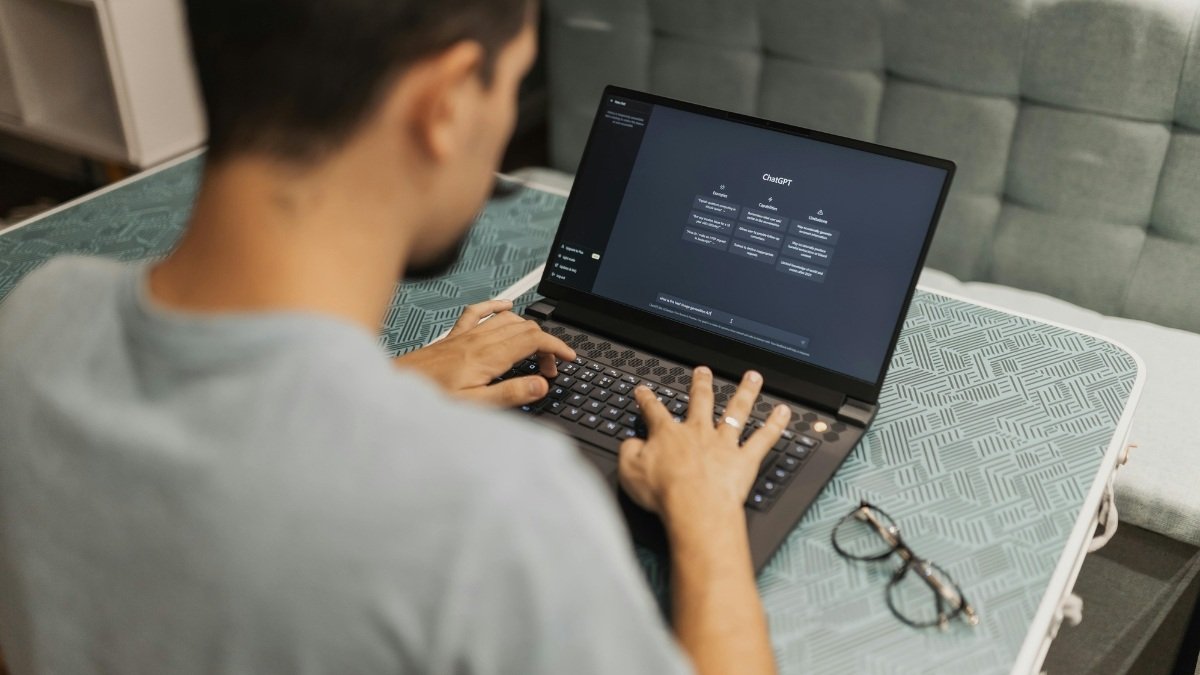
More people are using AI platforms to search: ChatGPT, Perplexity, Claude, Gemini. These tools are becoming the first place people go for answers and recommendations.
Google Ads don’t show up there.
But good SEO? It travels. When your website has strong content, clear structure, and real authority, you’re far more likely to get recommended by AI search tools. You don’t control it directly, but the same signals that earn you Google rankings tend to earn you AI visibility too.
OpenAI has also announced ads are coming to ChatGPT. That changes the paid landscape going forward, but it also signals that organic visibility across platforms is becoming the real competitive edge.
Running Google Ads only keeps you on one platform. SEO keeps you visible across the entire evolving search ecosystem.
Cost: What You’re Spending
Google Ads Costs
You pay per click. In competitive local markets, clicks can run from a few dollars to $20 or more depending on your industry and location.
On top of ad spend, there’s the time investment to learn the platform, build campaigns, write ad copy, test, and optimize. Done poorly, it burns money fast. Done well, it can deliver a strong return.
SEO Costs
SEO is free in the sense that you don’t pay per click. But it costs time.
Setting up your Google Business Profile takes about an hour. Building out your service pages takes a few hours. Writing a solid blog post takes another couple of hours. That’s the starting point.
The learning curve levels off fast. And unlike ads, that work doesn’t stop producing when you stop putting in hours. It compounds.
Would you rather pay for 10,000 website visits or earn 10,000 visits for free? The paid traffic is more targeted. But the organic traffic keeps coming after you’ve moved on.
Can You Do SEO Yourself?
Yes. You can.
This is one of the most common questions business owners ask. And the answer has gotten a lot easier with AI tools available to help you write, optimize, and plan content.
The fundamentals are not complicated. Optimizing your Google Business Profile is one of the highest-leverage moves available to any local business, and it doesn’t require a technical background.
Building out your web pages, writing blogs that rank, and understanding local SEO ranking factors are all learnable skills. AI platforms like ChatGPT or Claude can help you draft content, research keywords, and work through the process step by step.If you want structured guidance built around your business, Cliniverse has step-by-step courses that walk you through it without the agency cost.

Quick SEO Wins Most Businesses Are Leaving on the Table
A lot of small businesses have a homepage and a contact page. That’s it. A clinic website built to rank covers the pages most are missing:
- **Individual service pages:**One dedicated page per service you offer. Each one is a separate ranking opportunity.
- **Location pages:**If you serve multiple areas, a page for each location can drive significant local traffic.
- About page: Almost every business should have one (at least every local business). The about page is the second most visited page. It helps build trust and local authority.
- **A process:**Builds trust and helps potential customers learn about what it will look like working with you.
- **Case studies or results pages:**Show outcomes. AI search engines weight credibility and specificity.
- **Regular blog content:**Blogging is one of the best long-term SEO investments you can make.
- **Google reviews:**Consistent, recent reviews are one of the highest-impact local SEO actions available to you.
None of these are technical; they’re just pages and content. Build them, and you’re ahead of most businesses in your market.
When Should You Use Each One?
Always Do SEO
SEO should be a constant, not a campaign you run for 90 days and stop. Blog regularly, keep your Google Business Profile current, build new pages as your services expand, and earn reviews after every job.
Over time, it builds something your ads budget never will: a presence you own.
Use Google Ads to Skip the Line While SEO Builds
When you’re launching, adding a new service, or want leads faster than SEO can deliver them, Google Ads can run in parallel.
Run ads for the keywords you’re not ranking for yet. Let that traffic keep leads coming in while your organic rankings build. When your SEO starts producing results, you can pull back the ad spend, or ramp it up and drive in even more leads.
They’re not competitors. They’re a sequence.
Frequently Asked Questions About SEO & Google Ads
Is Google Ads or SEO better for small businesses?
SEO is better for long-term growth. Google Ads is better for short-term speed. Most successful small businesses use both at the same time, leaning on ads early and SEO consistently over time.
How long does SEO take to work?
Most businesses start to see meaningful movement in three to six months. Competitive markets may take longer. The important thing is starting now, because the clock doesn’t start until you do.
Can I do SEO myself?
Yes. The fundamentals are learnable, especially with AI tools helping you along the way.
What happens when I stop running Google Ads?
Your traffic stops. That’s the core limitation of paid search. If you haven’t built SEO alongside it, you have no fallback.
Does good SEO help me show up on ChatGPT or other AI tools?
It can. There are no guarantees, but strong website authority, quality content, and local relevance improve your chances of being recommended by AI search platforms.
So, Should You do Google Ads or SEO?
SEO is the foundation. Google Ads is the accelerator.
If you only run ads, you’re always renting your customers. The moment you stop, your lead flow stops.
If you invest in SEO consistently, you build an asset. One that shows up on Google, on AI platforms, and everywhere search is heading.
The smartest move? Start SEO now, even in small ways. Use Google Ads strategically to bridge the gap while your rankings build.
Want a system that helps you do both without paying agency prices? See what Cliniverse gives you.
Additional resources:
Related Articles
 Get Found Online
Meta Ads or Google Ads First? A Local Business Guide for 2026
Meta Ads or Google Ads first? It comes down to your budget and your industry. Here's how local businesses should choose in 2026.
Tyler · June 12, 2026
 Get Found Online
Google Ads Cost in 2026: Minimum Budget, CPC + ROI Breakdown
Google Ads cost breakdown: minimum daily budget, CPC by industry, and how many clicks Google needs to learn your campaign in 2026.
Tyler · February 18, 2026
 Get Found Online
Top 10 Forms Of Digital Marketing You Need to Do
Digital marketing has become a wide ranging discussion. Here is a list of the top forms of digital marketing that every business needs to do.
Tyler · July 11, 2023
Run Your Own Clinic Marketing
Cliniverse gives you the ads, posts, courses, and AI to grow your clinic, with experts on call. You own everything you build.