
Meta Advantage+ AI Writes Your Ads. You Answer for Them
Meta says reviewing its AI's output is your job, and your college says the same thing in writing: if a generated ad implies an outcome or invents a credential, you're the one who answers for it. Meta isn't registered with anybody.
We were building an ad in our own account with a photo of Tash and me. You add your images, you select the ones you want, and the next step is Meta recommending AI versions of them. It couldn't spell Cliniverse right. It changed our faces, swapped one of us out for a man who doesn't exist, and wrote a headline that isn't a sentence.
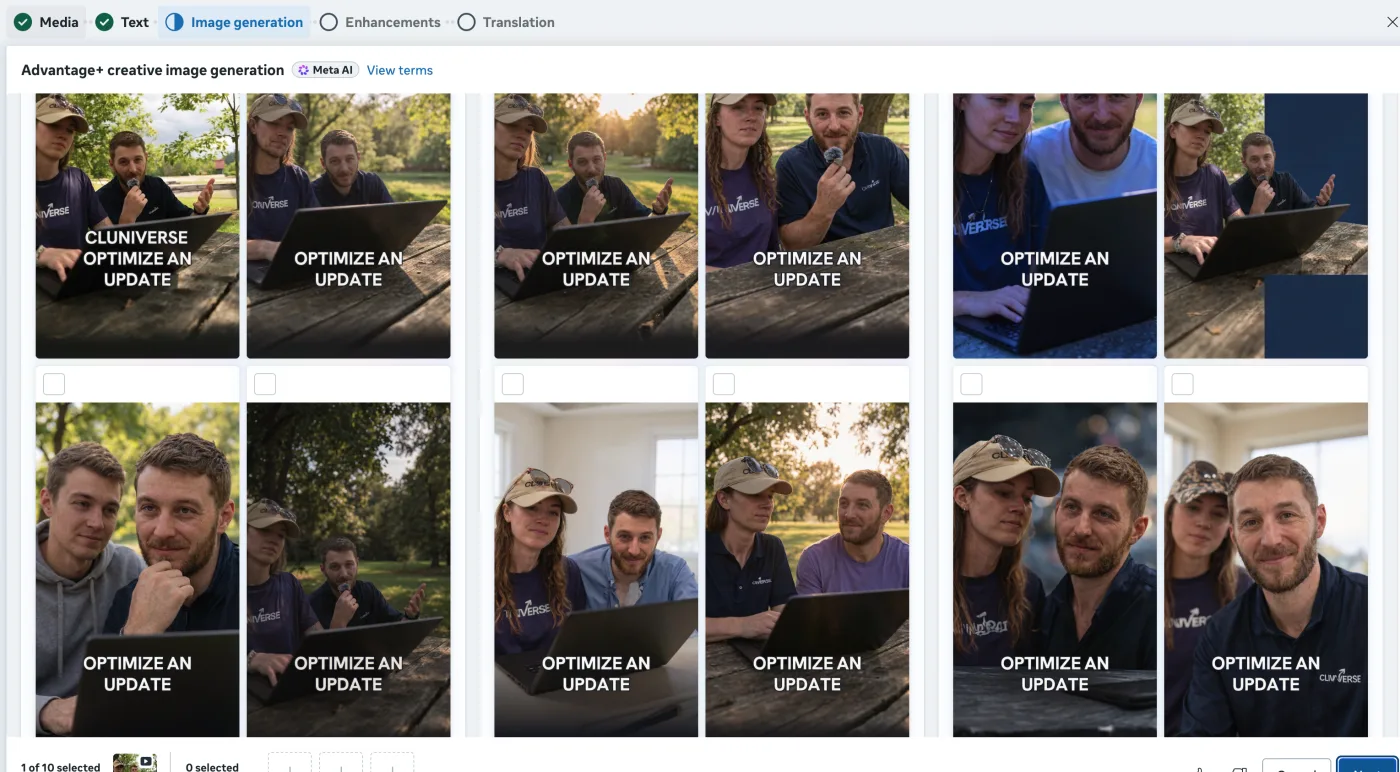
That's our own brand, so it makes us look stupid and nothing worse. There's no college holding us to anything. A clinic gets the same recommendations on its ads, where a made-up word becomes a compliance problem.
What Meta Advantage+ Is Building
Mark Zuckerberg has said the goal is that a business will be able to hand Meta a product image and a budget, and Meta's AI will produce the creative, pick the audience and run the campaign on its own. The stated target is the end of 2026.
Parts of it already ship. Meta reports more than nine million small businesses using at least one of its AI creative tools, and its own developer documentation says the system "automatically creates multiple variations of your ad", including "automatically adjusting the aspect ratio of your image or video" and "applying a template to your image to help it better fit certain ad placements". Inside Ads Manager you meet this at the point you upload your creative. Right after you pick your images, Meta offers to enhance them, with a line about advertisers who use this seeing better results.
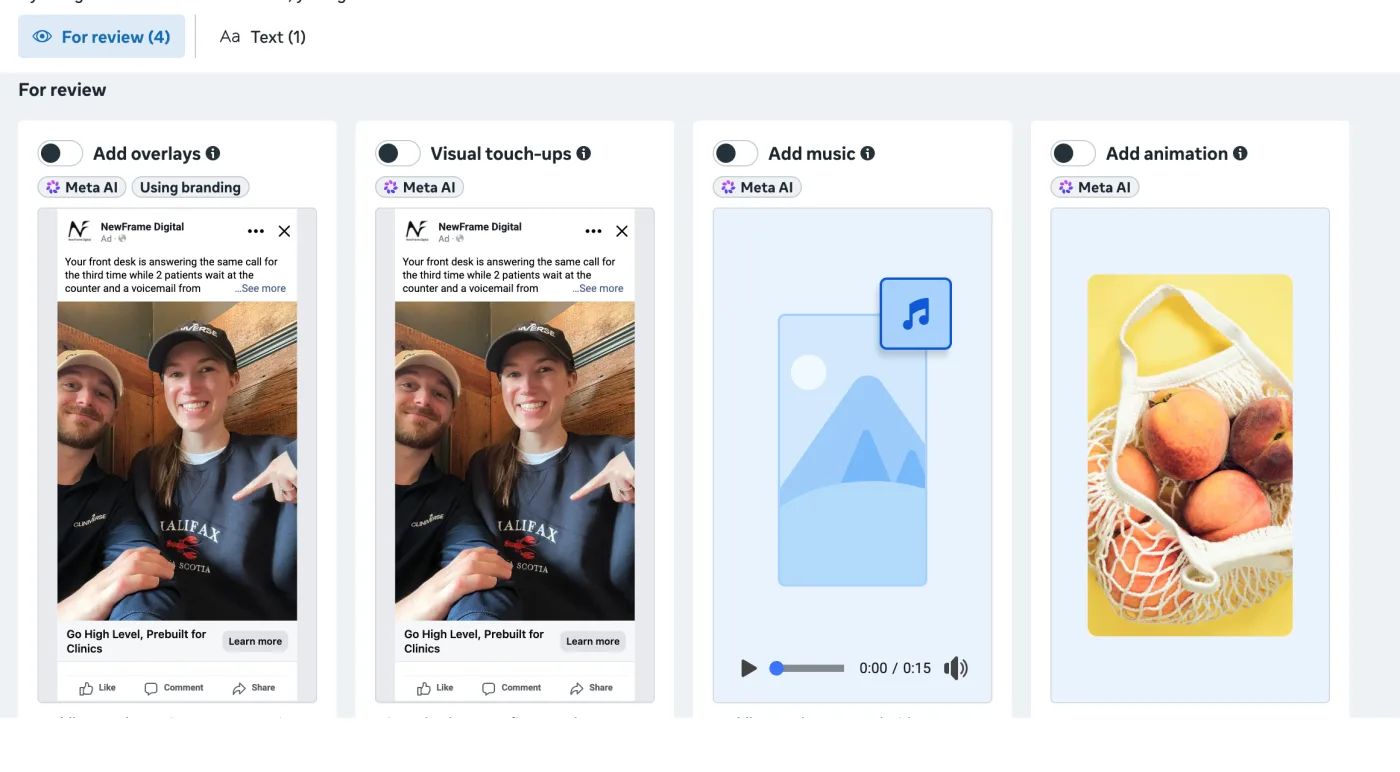
Nothing here is hidden. It's offered, it's framed as performance, and the default leans toward yes.
You Might Already Be Enrolled
The obvious response is to turn it off. That's worth doing, and it's harder to make stick than it sounds.
Creative enhancements are on by default for most new ad sets. REI found out the more public way: an Instagram ad went round showing a bike with two sets of handlebars, and REI said Meta had auto-enrolled them in the AI feature that produced it. They hadn't opted in. Business Insider spoke with eight advertisers and agency executives who described cleanup after Meta's AI as routine work now.
Three things make it stick badly:
The account-level default only governs new ad sets: setting it once doesn't reach back and protect campaigns that are already running.
Duplicating an ad doesn't reliably carry your settings: duplicate an ad set and the AI options can arrive checked, whatever the original had.
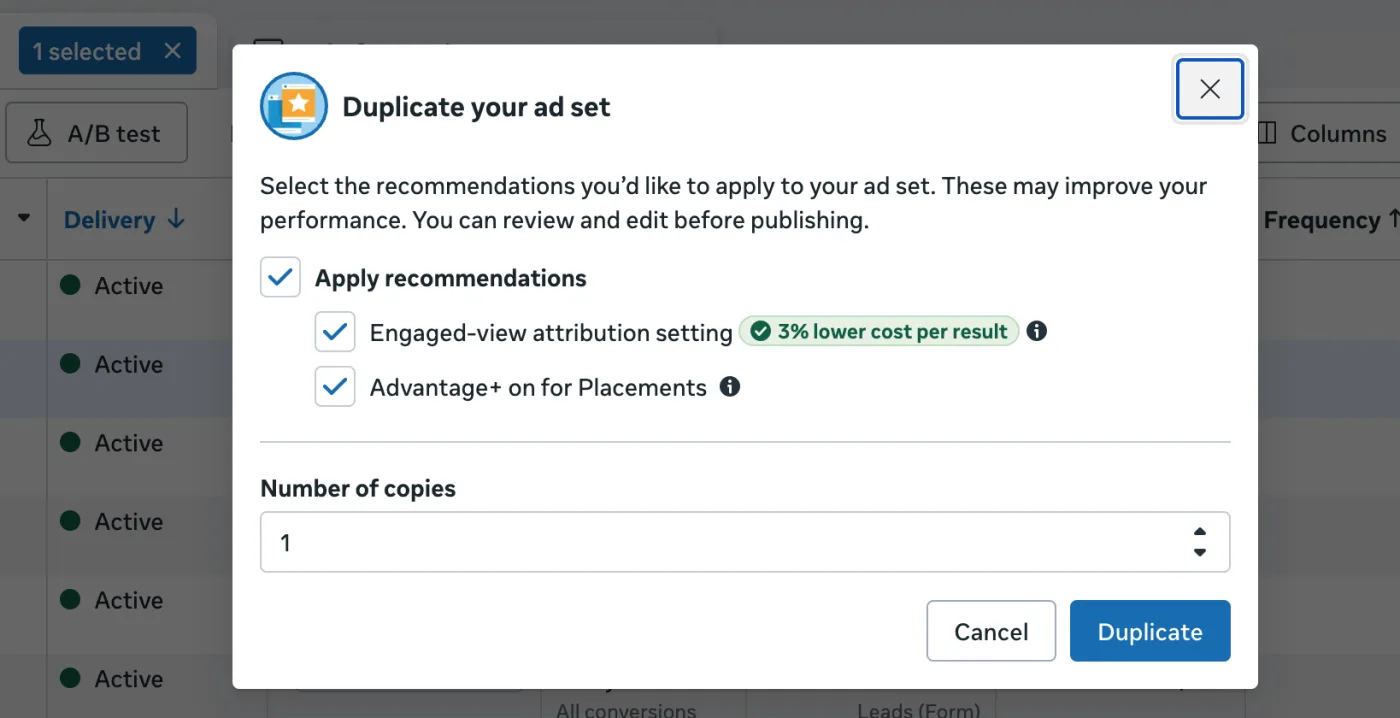
There's no single off switch: the toggles live per ad set, per enhancement.
There's a fourth one we can't confirm ourselves. Several agencies told Business Insider about a bug that toggled AI settings back on after they had switched them off. We haven't tested that in our own account, so treat it as reported rather than confirmed, but it matches what the setting feels like to manage. We open the panel every time we edit or duplicate an ad, because we don't trust it to stay where we left it. That habit costs ten seconds.
What a Generated Ad Costs a Regulated Clinic
For a retailer, a distorted product photo costs a returned order and a bad afternoon.
If you answer to a college, it's your licence on the line.
Regulators put responsibility for ad content on the advertiser, not the tool. Meta's own position is the same. Asked about the complaints, a Meta spokesperson said AI can make mistakes and that it's the advertiser's responsibility to review the AI outputs.
Your college says it more specifically. The College of Physiotherapists of Ontario's Advertising and Marketing Standard, in force since May 2025, requires that a physiotherapist "reviews all advertisements, marketing, and promotional activities placed by themselves or others on their behalf to ensure they are truthful, accurate, and verifiable, and if they are not, takes reasonable steps to correct the advertisements and documents the steps taken."
Read "or others on their behalf" with Meta's AI in mind. The obligation doesn't move because a machine wrote the words. It follows the registrant. The same standard rules out unsubstantiated claims, unrealistic expectations, promised outcomes and comparative claims about your care, and the other colleges hold chiropractors, massage therapists and naturopaths to their own versions of it.
So picture the failure modes, given a system that will misspell a logo four ways in one batch:
- Generated copy that promises relief, recovery or a result
- An invented credential, or "specialist" attached to someone who isn't one
- A fabricated person who reads as a practitioner or a patient
- Anything that functions as a testimonial, which is banned outright for massage therapists and naturopaths in Ontario
We've never had a clinic owner come to us with a college problem caused by a generated ad, and we're not going to tell you it's happening everywhere. What we can tell you is that the tool is already writing copy, the obligation to review it is written down, and the person named in the complaint is you.
The Failure You Won't See Coming
The obvious failures are the easy ones. A bike with two handlebars gets caught, because it's funny.
Here's one of our own ads, as a member saw it and sent it to us:
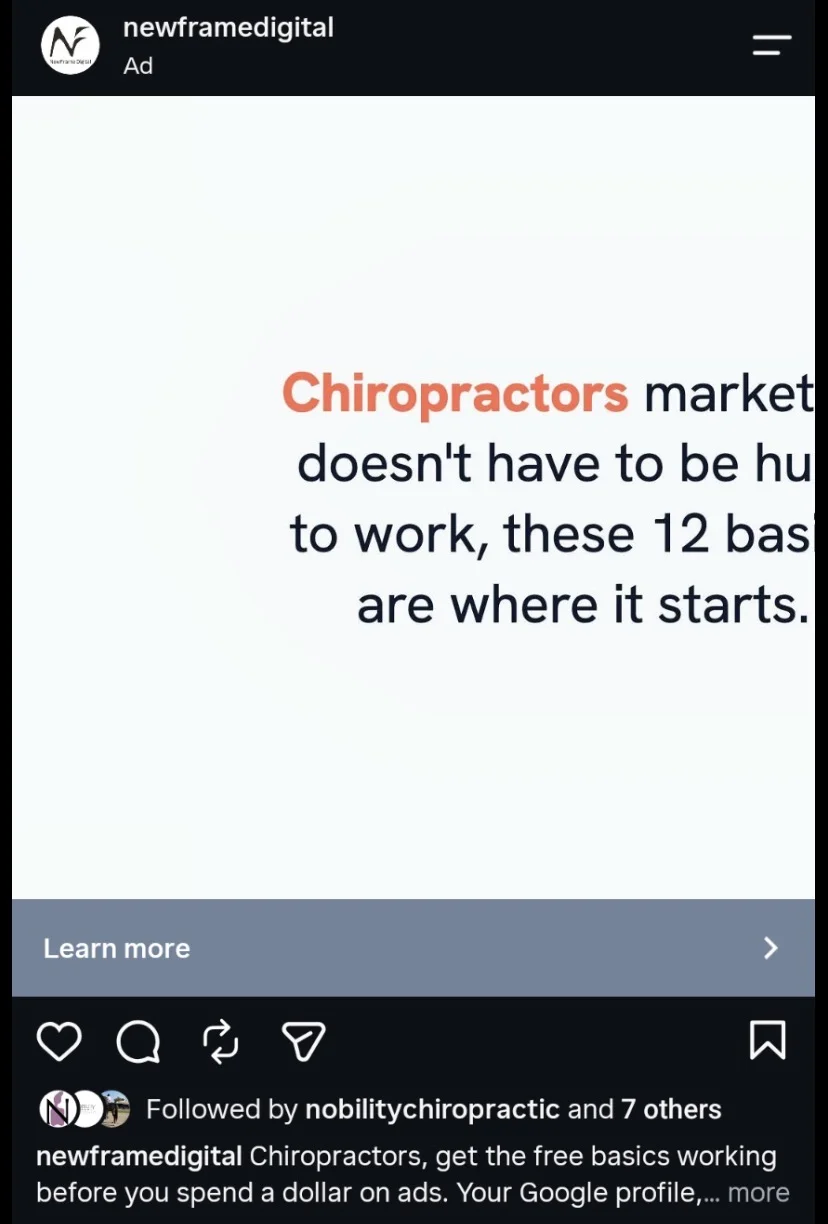
We set every crop Meta asks for. The frame it ran in is the one we built, and the words still fell off the side of it. It happened twice, on two different ads, and we didn't catch either one. A member did.
Meta's documentation says the system may apply a template to an image to help it fit a placement. We can't tell you what happened to this particular ad, and that's the point: we didn't choose it and we weren't told.
That's not AI inventing a face. It's four lines of text losing their last word, and it ran in public looking like nobody at a marketing company reads their own ads. That's the risk with automated creative: not the dramatic failure you'd notice, but the small one that runs for a week.
What to Do Before Your Next Meta Ad Goes Live
None of this is an argument against AI in your marketing. We use it daily, and we've written about where AI content stands with Google. The problem isn't generated, it's generated and published without anyone looking.
Open the Advantage+ creative panel on every ad, every time: including duplicates, especially duplicates.
Set the account-level controls, then go through your live campaigns separately. The account default only covers what you build next.
Read generated copy the way your college would: outcome promises, superiority claims, anything that works like a testimonial. Those are the words that cost you, and they're the register an AI writes in by default.
Look at your live ads on a phone, not the preview. Our cropping problem was invisible in Ads Manager.
Keep the evidence: the standard asks you to document the correction, not only make it. A dated screenshot is enough.
Put a human between generation and publish. That's the whole rule, and it's the one Meta and your college both agree on.
For where the rest of your control is going, we wrote about Meta removing placement exclusions, and what Meta ads cost a clinic if you're building a budget.
Where This Leaves You
Meta is going to keep handing pieces of your advertising to its AI, and it's telling you that checking the output is your job. Your college told you the same thing first, and only one of you is registered.
Creative and compliance are the two levers still entirely yours. That's where the work goes now.
That review step is what Cliniverse AI was built for. It writes ad copy against the advertising rules for your profession and province, then explains why the wording holds up, so you're reviewing with the rules in front of you instead of guessing. It's one piece of how we approach done-with-you clinic marketing.
Related Articles
 Get Found Online
How Much Do Meta Ads Cost? A Local Business Guide for 2026
How much do Meta ads cost? There's no fixed price. What you pay per result comes down to your budget and the campaign you run. Here's the breakdown.
Tyler · June 18, 2026
 Get Found Online
Meta Is Taking Away Your Placement Exclusions
Meta is removing placement exclusions from ad sets. Set the account-level control instead, and here's why it's the stronger block.
Tyler · August 29, 2026
 Get Found Online
Meta Ads or Google Ads First? A Local Business Guide for 2026
Meta Ads or Google Ads first? It comes down to your budget and your industry. Here's how local businesses should choose in 2026.
Tyler · June 12, 2026
Run Your Own Clinic Marketing
Cliniverse gives you the ads, posts, courses, and AI to grow your clinic, with experts on call. You own everything you build.